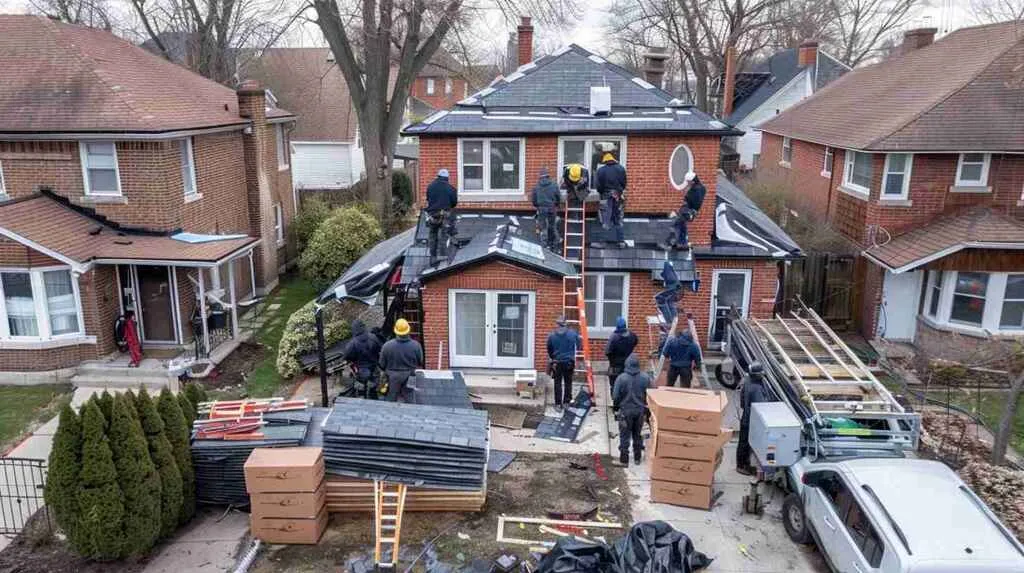
Cost to Tear Off Old Shingles Queens NY – Full Job Pricing | Free Estimates
Sticker shock hits hardest when you’re not expecting it, and in Queens most two-family tear-offs run between $3,500 and $8,200 depending on layers, access, and what’s hiding under those old shingles. Here’s what I’ve learned after 22 years tearing roofs in this borough: homeowners always underestimate disposal fees and the cost of rotted decking way more than they underestimate labor-and that’s exactly where estimates blow up mid-job.
On a typical two-family in Ridgewood, I’ll tell you straight: the tear-off alone can run you…
Between $45 and $95 per square-and remember, one square equals 100 square feet of roof-depending on how many layers I’m pulling off and whether your deck looks solid or sounds like a drumkit when we step on it. On a 1,800-square-foot two-family, that’s 18 squares, so you’re looking at roughly $810 to $1,710 for a single-layer tear-off labor and basic disposal, more like $1,440 to $2,850 if there are two layers, and I don’t even want to talk about three-plus layers until I’ve seen your attic. One August afternoon in Woodhaven, 96 degrees and not a cloud in the sky, I had a seller screaming because my tear-off price jumped once we opened the roof-under three layers of shingles we hit completely rotted plank decking, every step sounded like walking on a drum. I walked her through each sheet of plywood, line by line, on the driveway so she could see exactly why the “cheap” quote she’d gotten from another guy over the phone was a fantasy. That job taught me to never give firm tear-off pricing in Queens without a big caveat about hidden deck damage. Think of it like a kitchen renovation: the tear-off is your demolition, and the decking is your subfloor-you can’t install new tile until you know the subfloor isn’t rotted through, and you won’t know that for certain until the old floor is gone.
Now, before we move on to disposal, let’s connect that to something real: if you’ve got one layer of architectural shingles in decent shape, you’re at the low end of the range-$45 to $60 per square in labor and haul-away. Two layers? Figure $65 to $80 per square because it’s double the weight, double the nails, and a second dumpster trip. Three or more layers, especially if one of them is old cedar shakes or rolled roofing, you’re easily hitting $85 to $95 per square just for labor and basic removal, and that’s assuming I don’t find structural issues. These are ballparks, not contracts-older homes in Astoria, Bayside, and Jackson Heights almost always run high because builders slapped layers on top of layers back when code was looser. It’s like when you open a kitchen cabinet expecting one row of shelves and you find a second set of ancient cabinets screwed behind them; suddenly your “simple swap” turns into a full gut.
Sample Tear-Off Pricing for Common Queens Roof Sizes
Approximate labor + basic disposal only. Decking repairs, permits, and difficult access are extra. 1 square = 100 sq ft.
| Scenario | Approx Roof Size | Layers of Shingles | Estimated Tear-Off Cost Range | Notes |
|---|---|---|---|---|
| Small one-family (ranch) | 1,200 sq ft (12 squares) | 1 layer | $540-$720 | Easy driveway access, no deck work |
| Typical two-family (Ridgewood, Woodhaven) | 1,800 sq ft (18 squares) | 2 layers | $1,170-$1,440 | Common scenario; assumes 1 dumpster |
| Larger Colonial (Bayside, Flushing) | 2,400 sq ft (24 squares) | 1 layer | $1,080-$1,440 | Good deck, clear lot access |
| Multi-family or older Victorian | 2,400 sq ft (24 squares) | 3 layers | $2,040-$2,640 | Heavy load; may need 2 dumpsters |
| Astoria narrow-lot townhouse | 1,500 sq ft (15 squares) | 2 layers + cedar shakes | $1,275-$1,800+ | Street placement; parking permit required |
Important: These ranges assume easy dumpster access and no major deck replacement. Hidden rot, structural work, or difficult lot conditions can push costs 30-50% higher.
What most folks in Queens don’t realize is that the *heaviest* part of the bill isn’t my crew swinging shovels-it’s the debris leaving your block.
Dumpster rental, dump fees at the transfer station, and the extra labor hauling everything through narrow alleys or over chain-link fences add up faster than the actual tear-off. In January a few years back, I was on a narrow Astoria block at 6:30 a.m., coffee freezing in my hand, doing a tear-off estimate for a retired NYPD officer-it had just snowed, so I couldn’t see the shingle layers clearly, but I noticed the nails popping through the attic ceiling and guessed there were at least three roofs stacked. When we finally tore it off, it was four layers plus old cedar shakes; the disposal alone filled two 30-yard dumpsters. That morning is why I now explain dumpster and dump fees louder than anything else when I’m talking about the cost to tear off shingles. Tight streets in Ridgewood and Woodhaven mean dumpsters go on the curb, which means alternate-side parking headaches and sometimes a DOT permit or a ticket from a grumpy meter cop. Local transfer station rates in Queens can run $85 to $130 per ton depending on the month and how close you are to the Glendale or College Point facilities, and each layer of shingles on a typical two-family can weigh 2 to 3 tons. It’s like carting away old appliances and cabinets during a kitchen gut-the labor is quick, but the hauling and dump charges keep stacking.
Here’s the thing: a single-layer tear-off on a 1,800-square-foot roof might only need one 20-yard dumpster at around $450 to $550 all-in, but add a second layer and you’re either paying for a 30-yarder at $650 to $800 or you’re paying for a second trip and double dump fees, which can run $200 to $350 extra. Three layers? You’re looking at $900 to $1,400 in disposal alone, and if the dumpster goes over the weight limit-which happens all the time with old cedar or slate mixed in-you get hit with overage charges at $75 to $100 per ton. My insider tip: always ask the roofer how they handle overage tonnage and who eats the parking tickets if the dumpster sits longer than planned. Some guys lowball the tear-off estimate and then tack on “unforeseen disposal costs” after the shingles are already on the ground and you’re stuck.
Disposal and Dumpster Cost Breakdown for Queens Tear-Offs
| Condition | Dumpster Size / Trips | Typical Cost Range | What Makes It Go Higher |
|---|---|---|---|
| 1 layer, easy driveway access | 1 × 20-yard dumpster | $450-$550 | Overage fees if weight exceeds 3 tons |
| 2 layers, street placement | 1 × 30-yard or 2 trips | $650-$950 | Parking permit ($50-$100), alternate-side tickets, extra labor to haul across sidewalk |
| 3+ layers or mixed materials (cedar, slate) | 2 × 30-yard or multiple hauls | $900-$1,400+ | Heavy tonnage penalties, second-trip charges, disposal of hazardous materials (old tar paper, asbestos testing if pre-1980) |
| Difficult access (narrow alley, shared driveway, overhead wires) | Hand-carry to curb, multiple trips | Add $300-$700 | Extra crew time, debris chutes, neighbor coordination |
⚠️ Watch Out for Disposal Fee Surprises
Some contractors will quote you a low tear-off price by ignoring weight limits, extra layers, or local dump rates-then they hit you with change orders once the dumpster is full and you’re already committed. Before you sign anything, get the dumpster size, tonnage limits, and the fee structure for overages in writing. Ask explicitly: “If we go over weight or find extra layers, who pays and how much?” If they can’t give you a straight answer, that’s your red flag. A good estimate should spell out disposal as a separate line item, not hide it in a vague “all-in” number that magically grows when the shingles hit the ground.
I still remember one Bayside homeowner staring at the second layer of shingles like he’d just found out his house had a secret attic.
Hidden layers and weird past repairs can turn a $4,000 tear-off into a $7,500 structural project in one Saturday morning, and there’s no way to know until we pull the first section off. The wildest one was a Saturday evening in Jackson Heights for a couple who ran a home daycare-we’d planned a simple single-layer tear-off and re-shingle, timed around their vacation week. Halfway into the tear-off we found a homemade “patch” where somebody had literally nailed metal baking sheets over a rotten section instead of removing shingles properly. I had to pull the owners onto the sidewalk at 8 p.m., under a streetlight, and rework the budget to cover structural repairs and extra labor so they’d be watertight before the kids came back. That’s when I started warning every customer that what’s under the shingles can rewrite the whole bill in one afternoon. My insider tip: budget a 15-20% contingency for deck and structural repair on any Queens roof over 20 years old-it’s like finding a second row of cabinets behind the first during kitchen demo; you can’t just ignore it and keep going.
Myth vs. Reality: Layers and Hidden Roof Issues in Queens
| Myth | Reality in Queens |
|---|---|
| “I can see one layer from the ground, so that’s all there is.” | You’re only seeing the top layer. Two or three older roofs might be hiding underneath, especially on homes built before 1990 when code allowed stacking. |
| “Just slap another layer on top-it’s cheaper than tearing off.” | Code in most of NYC limits you to two layers max, and adding weight to a rotted deck is like putting new tile over a spongy subfloor-it’ll fail faster and cost more to fix later. |
| “If my attic looks dry, the deck must be fine.” | Deck rot often hides between rafters or under old tar paper. You won’t know until shingles come off and you can walk on the plywood. |
| “All tear-off quotes are the same-lowest price wins.” | The lowest quote usually skips disposal details, deck contingencies, or assumes perfect conditions. Real estimates include line items for dumpsters, dump fees, and “if we find X, here’s the add-on.” |
If I were standing in your kitchen right now, the first thing I’d ask you is: do you actually know how many layers are on your roof?
Knowing the layer count, your driveway access situation, and any signs of trouble in the attic lets me give you a ballpark that’s actually useful before I even set foot on your property. It’s like measuring your cabinet runs and appliance openings before you call a kitchen contractor-you skip the vague “it depends” conversation and jump straight to real numbers.
Before You Call: What to Check First
-
1
Visible layers at roof edges or gable ends: Look where shingles meet the fascia or rake edge-you can often count the stacked layers from the ground with binoculars. -
2
Attic nail pops or multiple rows of nails: Climb into the attic with a flashlight and check the underside of the roof deck-multiple sets of nail points or rusted nails mean multiple tear-offs in the past. -
3
Age of the last roof: Dig up permits, old invoices, or ask the previous owner-if it’s 20+ years old, assume at least two layers and possible deck damage. -
4
Driveway and street access: Can a 20- or 30-yard dumpster fit in your driveway, or does it have to go on the street? Are there overhead wires, narrow alleys, or shared driveways? -
5
Signs of leaks or water stains inside: Check ceilings and walls for brown spots or peeling paint-active leaks mean deck rot is likely and the tear-off cost will include structural work. -
6
Preferred timing: Are you on a closing deadline, or can you wait for off-season pricing? Spring and fall are busiest; winter tear-offs sometimes get a discount but weather delays are common. -
7
Your budget for contingencies: Have you set aside 15-20% extra for deck repairs, unexpected layers, or disposal overages?
Do You Need a Full Tear-Off, Partial Tear-Off, or Just an Inspection?
Are you seeing active leaks or ceiling stains?
↓ YES → You likely need a full tear-off soon. Schedule an on-site inspection to assess deck damage and get a written estimate with contingencies.
↓ NO → Keep reading ↓
Is your roof over 20 years old or do you see curling, missing, or cracked shingles?
↓ YES → Plan for a full tear-off within the next 1-2 years. Get quotes now so you’re not scrambling during a leak emergency or right before a closing.
↓ NO → Keep reading ↓
Are you just seeing minor granule loss or light wear with no visible damage?
↓ YES → You can probably wait. Schedule a routine inspection to confirm there’s no hidden damage, then revisit tear-off pricing in a year or two.
↓ If you’re buying or selling a home and need documentation fast → Call for an inspection and budget estimate within 48 hours.
Think of your tear-off cost the same way you’d think of ripping out old cabinets: you can’t set the new stuff until every rotten piece is off the wall.
What the full job looks like with Shingle Masters
We start with an on-site inspection where I’ll climb onto your roof, check the attic, count layers, and look for soft spots or deck damage-then I give you a written estimate that breaks out tear-off labor, disposal, deck repairs (if needed), and new shingle installation as separate line items so there’s zero mystery. Once you approve the numbers, we schedule the job around weather and your timeline, set up tarps and plywood walkways to protect your landscaping and siding, then tear off every layer down to bare deck. We inspect and replace any rotted or damaged sheathing, install ice-and-water barrier and underlayment (that’s like your backsplash prep in a kitchen-you don’t see it, but it’s what keeps moisture out), then install your new shingles, ridge caps, and flashing. Final step is a walkthrough where I show you every repair we made and haul away the last of the debris so your property looks cleaner than when we started.
When to call versus when to wait a season
If you’ve got active leaks, soft spots when you walk on the roof, visible sagging, or a closing deadline, call now-waiting just means more deck damage and higher repair costs. If you’re only seeing minor granule loss or light curling and your attic looks dry, you can usually wait a season and schedule the tear-off during the fall or winter when pricing is a bit softer and my crew has more flexibility. Either way, don’t wait until you’re in the middle of a rainstorm or a buyer’s inspector flags your roof as a deal-breaker.
How a Queens Tear-Off Project Runs with Shingle Masters
On-Site Inspection & Layer Count
Vic walks your roof, checks the attic for nail pops and moisture, counts visible layers, and tests deck firmness. You get a ballpark range on the spot.
Written Estimate with Line-Item Breakdown
Within 24-48 hours, you receive a detailed quote separating tear-off labor, disposal, deck repairs, underlayment, and new shingles-plus contingencies for hidden damage.
Property Protection & Dumpster Delivery
We set tarps, plywood walkways, and magnetic sweepers to protect your landscaping, siding, and driveway. Dumpster is placed for easiest access or on the street with proper permits.
Complete Tear-Off to Bare Deck
Every layer of old shingles, felt, and nails comes off. We inspect the decking, mark any soft or rotted sections, and call you before making repairs so there’s no surprise invoice.
Deck Repair, Underlayment & Ice Barrier Installation
We replace damaged plywood, install ice-and-water shield at eaves and valleys, and roll out synthetic underlayment-this is the “subfloor” layer that keeps water out even if shingles fail.
Final Cleanup, Walkthrough & Debris Removal
Magnetic sweep for nails, haul away all debris, and a walkthrough where Vic shows you every repair and answers any questions. Your yard looks cleaner than before we started.
⚠️ Call ASAP If You See:
- Active leaks or water stains spreading on ceilings
- Soft spots or “spongy” feel when walking on the roof
- Visible sagging or dips in the roofline
- Home sale pending and buyer’s inspector flagged the roof
✓ Can Usually Wait a Season:
- Minor granule loss with no exposed mat
- Light curling or a few cracked shingles
- Small stains that haven’t grown in 6+ months
- Attic looks dry and no soft spots detected
Why Queens Homeowners Call Vic at Shingle Masters for Tear-Offs
- ✓ 22+ years roofing experience in Queens neighborhoods-Ridgewood, Astoria, Bayside, Jackson Heights, Woodhaven, Flushing
- ✓ Fully licensed and insured in New York State
- ✓ Free on-site estimates with line-by-line pricing-no hidden fees
- ✓ Typical response time: 24-48 hours on weekdays for estimate appointments
- ✓ Experienced with multi-layer tear-offs, cedar shake removal, and structural deck repairs
- ✓ Comfortable working around tight streets, shared driveways, and overhead utility lines
Here’s the blunt truth: in Queens, old roofs are like lasagna-no one knows how many layers are in there until you cut into it.
Budget for contingencies, ask for written estimates with disposal and deck-repair line items, and don’t trust anyone who gives you a firm tear-off price over the phone without caveats. You deserve better than a surprise invoice halfway through the job.
Common Questions About the Cost to Tear Off Shingles in Queens, NY
Why can’t you give a firm price over the phone?
Because I can’t see how many layers are actually on your roof, whether the deck is rotted, or how tight your driveway access is from my desk. Anyone giving you a rock-solid tear-off price in Queens over the phone is either guessing or planning to hit you with change orders once the shingles come off. I’d rather give you an honest range and then tighten it up after I’ve walked your roof and attic in person.
How much extra should I budget for bad decking?
On a typical Queens two-family, set aside $800 to $2,000 for deck repairs if your roof is over 20 years old or you’ve had leaks. Plywood runs about $50 to $70 per sheet installed, and a badly damaged roof might need 10 to 30 sheets replaced. If you’ve got widespread rot or structural issues, that number can climb to $3,000 or more-but I’ll call you before making those repairs so you’re not blindsided.
Does season affect tear-off cost in Queens?
Sometimes. Spring and fall are peak roofing season, so pricing is firm and my schedule fills fast. Winter tear-offs can run 10-15% cheaper because demand is lower, but weather delays are common and frozen shingles are harder to remove. Summer is hot and miserable for the crew, but jobs move faster. If you’re flexible on timing and not in a rush, late fall or early winter can save you money.
Can you tear off and re-roof in one day on a typical two-family?
On a straightforward single-layer tear-off with no major deck issues, yes-a full crew can usually strip, repair minor deck spots, underlayment, and reshingle a 1,800-square-foot roof in one long day if weather cooperates. But if we find multiple layers, extensive rot, or run into a thunderstorm, it becomes a two- or three-day job. I always tarp vulnerable sections at the end of each day so you’re never left exposed overnight.
Are permits required for tear-offs in Queens?
In most cases, yes-NYC requires a building permit for full roof replacements, including tear-offs, especially on multi-family homes. I handle the permit application and include the cost (typically $200 to $400) in my estimate. If you’re just doing a small repair or partial tear-off, you might not need one, but it’s safer to pull the permit and avoid DOB headaches later. Street dumpster placement usually also requires a separate DOT permit, which I coordinate with the dumpster company.
At the end of the day, Shingle Masters can walk your specific roof, count every layer, check your deck and attic, and give you a line-by-line tear-off estimate with clear contingencies so you know exactly what you’re paying for-and what might change if we find surprises. Call Vic at Shingle Masters to schedule a Queens on-site inspection and get your free written estimate, usually within 24 to 48 hours on weekdays.