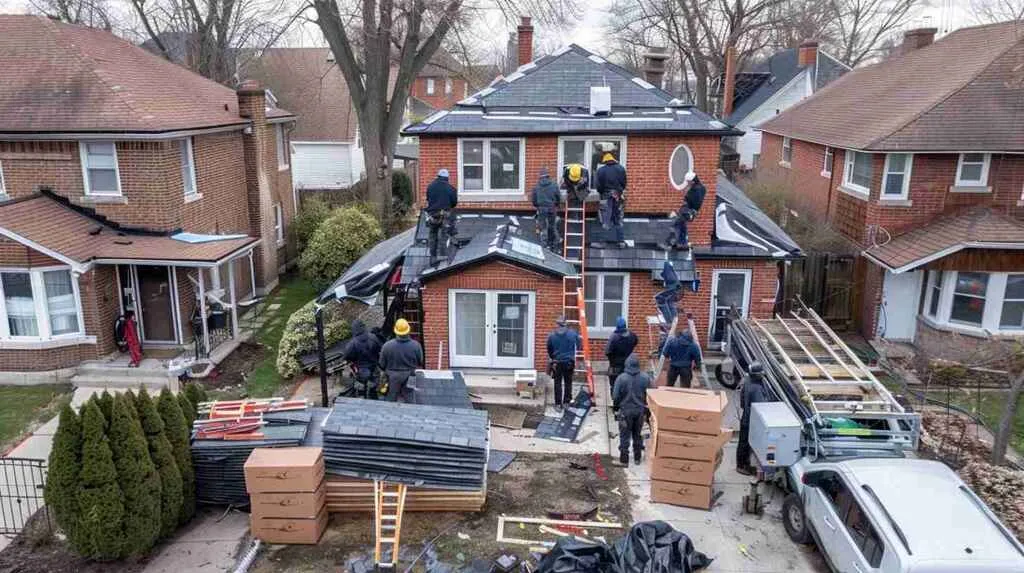
Shingle Roof Ventilation Queens NY – Why It Affects Everything | Call Today
Breathe in, breathe out-your roof needs to do the same. A badly ventilated shingle roof in Queens can silently add $40-$80 a month to your energy bill and cut 8-10 years off your roof’s life, even if the shingles look “perfect” from the street. I’m Luis, and after 17 years of crawling through Queens attics-from Jackson Heights walk-ups to Flushing capes-I spend more time at your kitchen table with a sketch pad explaining how your roof breathes than I do trying to sell you the fanciest shingle on the market.
Why Your Shingle Roof in Queens Has to Breathe to Survive
On 108th Street last summer, I measured an attic at 148°F while it was only 92°F outside. The shingles looked fine from the curb, but that kind of heat was cooking them from below, baking the adhesive strips, warping the decking, and pushing an extra $60 to $80 a month onto that homeowner’s Con Ed bill just to fight the furnace overhead. When ventilation fails, you’re not just losing comfort-you’re watching 8 to 10 years of roof life disappear into invisible damage while the outside still looks normal.
Think of your roof like a body. Intake vents down at the soffits are the lungs, pulling fresh air in. Ridge vents at the peak are the nostrils, letting hot stale air escape. Insulation is your skin, keeping inside and outside separate. Moisture is sweat-and if your roof can’t breathe and cool itself, that sweat has nowhere to go. Most shingle roofs in Queens are built like strong bodies with their mouths taped shut: good bones, decent shingles, zero airflow. They suffocate slowly, season after season, until one summer the curling starts or one winter the mold appears.
Here’s my honest opinion after nearly two decades in this work: ventilation should be designed before you even pick a shingle color. I’ve seen premium architectural shingles fail in seven years on a house with no intake vents, and I’ve seen basic three-tab shingles hit 22 years on a roof that breathes right. I remember sitting on the attic joists in Flushing one August afternoon, sweating through my shirt, showing a retired teacher a quick pencil sketch of how the heat was trapped and slowly cooking her brand-new roof from the inside-no intake vents, just a tiny, painted-over gable vent. It was so hot my phone shut down in my pocket. Her shingles were already curling after one summer, not because they were bad shingles, but because the roof couldn’t breathe.
| Attic Ventilation Condition | Typical Summer Attic Temp in Queens | Extra Energy Cost / Month | Expected Shingle Roof Life |
|---|---|---|---|
| Poor or Blocked Ventilation | 135°F – 155°F | +$40 – $80 | 12 – 15 years |
| Partial Ventilation (intake OR exhaust only) | 110°F – 130°F | +$20 – $40 | 16 – 19 years |
| Proper Balanced Intake + Exhaust | 95°F – 110°F | Baseline (no excess) | 20 – 25+ years |
Myth vs. Fact: Shingle Roof Ventilation in Queens
| Myth | Fact |
|---|---|
| “A new roof doesn’t need vents-they’re only for old attics.” | New shingles without ventilation will age faster than old shingles with proper airflow. Ventilation protects your investment from day one. |
| “Cold attics only cause ice dams upstate, not in Queens.” | Queens gets snow and freeze-thaw cycles. Poor ventilation traps heat that melts snow unevenly, creating ice dams and water backup even here. |
| “Gable vents alone are enough for most homes.” | Gable vents move air sideways, missing the peak where heat concentrates. You need both low intake (soffit) and high exhaust (ridge) for real flow. |
| “More vents are always better.” | Wrong ratio or placement creates turbulence and short-circuits airflow. It’s about balance and design, not just quantity. |
| “Ventilation is just for comfort-it doesn’t affect the roof itself.” | Heat and moisture trapped in the attic attack shingles, decking, insulation, and framing. Ventilation is structural protection, not a luxury. |
How I Diagnose a Suffocating Shingle Roof in Queens
Let’s be blunt: most shingle roofs in Queens are suffocating, and the owners have no idea. When I show up to a house in Jackson Heights or Astoria or Flushing, the first thing I do is walk the block and look at how the neighboring roofs are aging-blistering patterns, shingle curl, uneven fading. Then I check the soffits for intake vents (or painted-over fake vents that do nothing), scan the ridge line for continuous ridge vents or old box vents, and if I can safely get into the attic, I take a temp reading and look for moisture stains, rusted nails, or that musty smell that says trapped air has been cooking in there for years. In a typical Queens two-family or cape, I can usually tell within ten minutes whether the roof is breathing or slowly dying.
During a rainy November evening in Astoria, a young couple called me because they thought they had a roof “leak” over their baby’s room. The roof shingles were fine, but the attic decking above that room was black with mold and dripping from condensation because their bathroom fan was dumping steam into a dead, unventilated space. I still remember the sound of the rain on the sheathing while I explained that their problem wasn’t outside water getting in-it was inside moisture with nowhere to go. Not all ceiling spots are leaks. Some are sweat, because the roof can’t breathe.
Luis’s 6-Step Shingle Roof Ventilation Check During a Queens Home Visit
I look at neighboring roofs to see aging patterns-curling, blistering, uneven color-that signal ventilation problems common to the whole street.
I look under the eaves to confirm there are real intake vents-not painted-over screens or solid aluminum-and that they’re not blocked by insulation inside.
I look for continuous ridge vents, old box vents, turbines, or nothing at all-and note if there’s a mix of exhaust types that might create airflow confusion.
Simple questions: Does your top floor feel 10 degrees hotter in summer? Have your cooling bills jumped? Do you get frost on bedroom windows in winter?
On a warm day, I measure the attic temp and compare it to outside. Anything over 20-30°F hotter than ambient means trapped heat is cooking your roof.
Rusted nails, black mold on decking, wet insulation, or baffles missing between rafters all tell me air isn’t moving and moisture is winning.
Do You Likely Have a Shingle Roof Ventilation Problem?
NO → Skip to next question
YES but cool top floor → Monitor but plan upgrade
NO → Continue below
NO → Continue below
YES to both → Ventilation likely OK but schedule routine check
From the street, you can’t see a suffocating roof-you can only see it on your bills and in your attic.
Typical Shingle Roof Ventilation Fixes and What They Cost in Queens
Here’s the uncomfortable truth: you can spend good money on premium shingles and still destroy them in a decade with bad ventilation. Most fixes I do in Queens fall into a few patterns-adding intake where there is none, improving ridge exhaust, correcting bathroom or dryer fans that terminate into the attic instead of outside, or redesigning the whole system on an older home that was never ventilated right to begin with. One strange, foggy early morning in Howard Beach, I met a landlord in the driveway at 6:30 a.m. because his top-floor tenant complained about “burnt plastic smell” every hot day. Standing in the quiet street, I could see his shingles were visibly blistered in small patches right above where multiple exhaust fans and vents had been jammed together. When I opened the attic hatch, the trapped heat and humidity fogged my glasses, and I walked him through how his mixed-up ventilation was turning that space into a slow-pressure cooker for his shingles and wiring.
Common Queens Shingle Roof Ventilation Scenarios & Estimated Costs
| Scenario | What’s Included | Typical Price Range (Queens, NY) |
|---|---|---|
| Add Soffit Vents to Small Cape or Ranch | Cut new soffit vents, install screens, add baffles between rafters to prevent insulation blockage | $800 – $1,400 |
| Add Ridge Vent to Medium Colonial | Cut ridge opening, install continuous ridge vent along 30-40 ft peak, seal and shingle | $1,200 – $2,200 |
| Reroute Bathroom Fan + Add Insulation Baffle | Extend duct to proper exterior exhaust, install vent cap, add baffles to restore airflow path | $600 – $1,100 |
| Full Intake + Exhaust Redesign on Older Multifamily | Add soffit vents both floors, install ridge vent, remove old conflicting box vents, add baffles throughout | $2,800 – $4,500 |
| Inspection + Minor Tune-Up (clear blockages, adjust existing vents) | Professional attic inspection, temp measurement, clear soffit blockages, seal small air leaks | $300 – $650 |
Prices reflect typical Queens labor rates and materials as of 2025. Actual cost depends on roof access, home size, and existing structure.
Ridge Vents vs. Box (Static) Vents on Shingle Roofs
| Option | Pros | Cons |
|---|---|---|
| Ridge Vents |
• Continuous airflow along entire peak • Low profile, nearly invisible from street • Works naturally with convection (hot air rises) • Even exhaust, no hot spots |
• Requires cutting ridge opening (more labor) • Won’t work if ridge is too short or interrupted • Needs proper intake vents to function |
| Box (Static) Vents |
• Easier to add to existing roof • Can target specific hot zones • Lower install cost per vent • Works on hips and complex roof shapes |
• Only exhaust air directly below each box • More visible, can look dated • May create uneven temps across attic • Often insufficient if used alone |
My take: For most Queens homes with a standard gable or hip roof, a continuous ridge vent paired with soffit intake gives you the best long-term performance and clean look. Box vents are useful for additions, garages, or oddball sections, but they shouldn’t be your only exhaust.
Simple Checks You Can Do Before You Call a Roofer
When I walk into a house, the first question I ask isn’t about shingle color-it’s how hot that top floor gets in July. You don’t need a ladder or an infrared camera to get a feel for whether your roof is breathing. Stand in your top-floor bedroom on a 90-degree day and notice if it feels like a different climate zone from the rest of the house. Check your energy bills-if summer cooling costs jumped after your new roof went on, that’s a red flag. In winter, look for condensation on bedroom windows or that musty attic smell when you open the hatch. These are safe, ground-level clues that tell you whether air is moving through your roof system or sitting there cooking and sweating.
Here’s one insider tip I share with every homeowner in Queens: after a snowfall or a hard frost, step outside and look at your roof and your neighbors’ roofs from across the street. If the snow on your roof melts in uneven stripes, or if frost disappears first along the ridge while the rest stays white, that’s a sign of hot spots caused by trapped attic heat. A properly ventilated roof will melt snow evenly and slowly, because the attic temp stays close to the outside temp. It’s a low-effort observation you can make from your sidewalk or window, and it tells you more than most people learn from an expensive inspection.
✓ Quick Ventilation Reality Check for Your Queens Shingle Roof
Before you schedule a pro visit, run through these simple observations-no ladder, no attic gymnastics required:
If you checked 2 or more boxes, your roof ventilation likely needs professional attention-and the sooner you address it, the more roof life and energy dollars you’ll save.
⚠️ Safety & DIY Limits for Shingle Roof Ventilation Checks
Do NOT attempt:
- Cutting new vents into your roof or soffit yourself
- Walking on a steep or wet shingle roof to inspect vents
- Opening electrical connections or exhaust fan housings in the attic
- Removing insulation or decking to “improve airflow” without a plan
- Climbing into an attic with unsafe footing, poor lighting, or no ventilation
Stick to visual checks from the ground, sidewalk, and safely accessible areas. Leave the diagnosis, cutting, and airflow design to a licensed pro who knows Queens building codes and won’t void your roof warranty.
Why Shingle Masters Treat Your Roof Like a Living System
Think of your roof like a runner in a marathon: if you tape their mouth and nose, it doesn’t matter how good their shoes are. I learned HVAC before I learned roofing, so when I look at your house in Jamaica or Howard Beach or Astoria, I’m not just seeing shingles-I’m seeing intake, exhaust, insulation, and moisture as one connected system. Different Queens neighborhoods have different wind exposures, different building ages, different attic layouts. A walk-up in Jackson Heights breathes differently than a detached cape in Flushing, and I sketch out the airflow path for each one before I recommend a single vent. It’s not about selling you the most expensive fix; it’s about getting the breathing right so your roof can cool itself, shed moisture, and protect your home the way it’s supposed to.
When you call Shingle Masters for a ventilation-focused roof visit, here’s what actually happens: I show up with a notebook, not a pitch deck. We walk your property, I check your attic if you’re comfortable with that, and then we sit down at your kitchen table and I sketch the system on whatever’s handy-a napkin, a scrap of paper, the back of an estimate form. You’ll see exactly where air is supposed to enter, where it’s supposed to leave, and where it’s getting stuck or blocked right now. If your shingles are still healthy and the only problem is ventilation, I’ll tell you that-no pressure to replace a roof that doesn’t need replacing yet. We’re just getting the breathing right, and that honest approach is why people in Queens keep my number in their phone.
Why Queens Homeowners Hire Shingle Masters for Ventilation Work
Years Shingle Roofing Experience
Nearly two decades diagnosing and fixing Queens roofs in every neighborhood and building type.
Former HVAC Technician
Unique background in airflow and climate control brings a systems-based approach to roof ventilation.
Fully Licensed & Insured (NYC)
All proper permits, insurance, and credentials for residential roofing work throughout Queens.
Queens-Focused Service Area
Deep familiarity with local building styles, weather patterns, and neighborhood-specific ventilation challenges.
24-48 Hour Response Time
Typical turnaround for non-emergency inspections and consultations; emergency service available when needed.
Shingle Roof Ventilation Questions from Queens Homeowners
Absolutely. If your shingles still have life left, we can add soffit vents, install a ridge vent, reroute exhaust fans, or upgrade your attic baffles without touching the shingles. Ventilation work is usually a targeted fix, not a full tear-off.
Most jobs-adding soffit vents and a ridge vent to a standard Queens home-take 1 to 2 days. Smaller fixes like rerouting a bathroom fan or adding a few baffles can be done in half a day. We work efficiently and clean up completely before we leave.
Yes-especially in summer. A properly ventilated attic runs 20-40°F cooler, which means your AC isn’t fighting a 150-degree oven overhead. Most homeowners see $30-$60/month savings during peak cooling season, and the roof itself lasts years longer.
Most older homes in Queens weren’t built with continuous soffit vents, but that doesn’t mean we can’t add them. We carefully cut openings, install proper screens and baffles, and make sure the intake matches your exhaust so the system is balanced. It’s very doable, even on 1940s-1960s construction.
Spring and fall are ideal-mild temps, easier scheduling, and you’re ready before summer heat or winter moisture hits. But we work year-round. If your ventilation is failing now, waiting six months just gives the problem more time to damage your roof and rack up energy costs.
In Queens, a shingle roof lives or dies by how well it breathes-not by the brand name on the wrapper or the warranty card in your drawer. If you’re tired of a stuffy top floor, rising energy bills, or that nagging worry that something’s not right up there, call Shingle Masters and let me come out, walk your block, check your attic, and sketch a simple ventilation plan before you spend another season overpaying on energy. We’ll get your roof breathing right, and once it does, you’ll feel the difference in every room and see it on every bill.