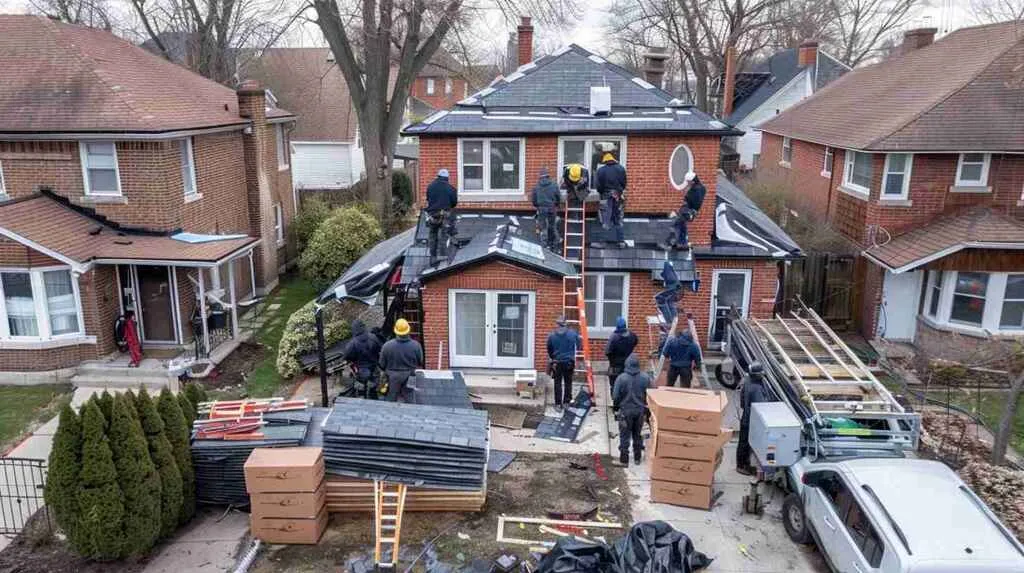
Shingle Roof Details Queens NY – What Every Layer Requires | Free Estimates
Blueprint for avoiding disaster: I’m going to start by telling you that in Queens, I’ve seen $8,000 worth of interior damage caused by a missed $3 roofing nail and a strip of underlayment that ended two inches too short, because that’s how crucial shingle roof details really are. Most people think a leak means you need “new shingles,” but after 19 years on roofs from Astoria to Far Rockaway, I can tell you the real problem is almost always buried in the layers you can’t see-and this article is going to walk you through every one of them, layer by layer, like a backstage tour of a live show.
Why the Hidden Shingle Roof Details Matter More Than the Shingles
If you’ve ever watched stagehands flip a whole set in 90 seconds, you already understand how each roof layer has a job, and if one person misses their cue, the whole thing falls apart. On Queens roofs, your shingles are the actors-visible, taking all the credit-but the real work happens backstage with the underlayment, flashing, and deck. When a leak shows up in your bedroom ceiling, nine times out of ten it’s because somebody skipped a detail in one of those invisible layers, not because a shingle cracked. Here’s my honest opinion: if your roofer can’t explain each roof layer without looking at a brochure, you should not hire them. I started my career building waterproof fake rooftops for Broadway, where missing a single seam meant the lead actor got rained on during Act Two, and I bring that same paranoia to every real roof I touch.
On a little brick house off Northern Boulevard last winter, I saw exactly what happens when one layer gets skipped. The owner in Forest Hills called me around 7:30 at night, swearing the leak only showed up “when the neighbor’s sprinklers are on.” By the time I peeled back the shingles by the party wall under my headlamp, I found the underlayment stopped three inches shy of the wall and the step flashing was just face-nailed into the siding-no proper weave, no secondary water barrier. I still remember the exact moment the first raindrop hit that exposed sheathing while I was showing him the gap; he went dead silent because he realized every “cheap fix” he’d hired had patched the top shingles and ignored the cue happening six inches below. Water had been traveling sideways under the top layer for months, following that seam like a script, and the stain inside his house was 11 feet away from where it actually entered. Each layer in your roof is an actor with lines to deliver-if the backstage crew (your underlayment) misses their cue, the whole performance falls apart.
| Myth | Fact |
|---|---|
| “If the top shingles look new, the roof is fine.” | Most leaks I fix in Queens start in the layers you can’t see: underlayment, flashing, or decking seams. |
| “A small stain means a small leak right above it.” | Water can travel sideways 5-15 feet along a felt or ice shield lap before it ever shows up inside. |
| “Any contractor can handle a simple shingle job.” | Queens roofs have party walls, dormers, and odd tie-ins that demand real detail work, not just shingle nailing. |
| “Extra layers are just upsells.” | Each layer-deck, underlayment, shingles, flashing, vents-has a specific job; skip one and the system goes off cue. |
Every Layer in a Queens Shingle Roof System, From Deck to Ridge
From bare wood to finished shingles: the full stack
Picture me on a ridge in Woodhaven, holding a bundle of starter shingles in one hand and a roll of ice shield in the other-that’s where the real leak prevention starts. Before we even talk about nailing your first shingle, I need to know what’s under it. In Jackson Heights, Corona, and older sections of Bayside, I’ll find original plank decking-individual boards laid diagonal or straight, sometimes with gaps you can see daylight through. In newer builds or recent replacements, it’s plywood or OSB sheathing. That difference changes everything: how I space fasteners, where I add blocking, whether I sister in extra support before the new roof goes on. Before we go up a layer, let’s stay right here for a second and talk about why the deck matters so much. If your deck has soft spots, gaps wider than a quarter-inch, or old patchwork from three different repair eras, putting new shingles on top is like dressing an actor in a tuxedo when the stage floor underneath is rotten-looks great until someone takes a step and falls through.
One freezing January morning in Bayside, about 6:45 am, I was called to a colonial where the interior painter was getting blamed for “ruining the ceiling.” When I climbed into the attic, I could literally scrape frost off the underside of the sheathing with my putty knife, then watch it melt into drips when the sun hit. The roof “looked new”-pretty architectural shingles, clean lines-but whoever did it had nailed them directly over an old cedar shingle layer with zero ventilation or proper underlayment, so the whole assembly was basically a plastic bag trapping moisture. That day taught me to never trust a pretty top layer. Think of your underlayment and ventilation as the backstage crew: nobody in the audience sees them, but if they’re not doing their job, the whole show turns into a disaster. Ice and water shield is your self-sealing membrane that stops backed-up water at eaves, valleys, and low-slope spots; felt or synthetic underlayment is your secondary water-shedding layer across the main field. Skip either one, or run them sloppy with gaps and wrinkles, and you might as well leave holes in the roof.
How I inspect each layer on your Queens home
Here’s the thing: every transition on your roof-eaves, rakes, valleys, walls, penetrations-is a separate “scene” in the set, and I check each one like a stage manager walking through cues before opening night. Before we go up a layer, let’s stay right here for a second at the eave and make sure the ice shield is lapped correctly, the drip edge is tucked under the underlayment but over the shield, and the starter strip is aligned to stop wind-driven rain from sneaking under that first course of shingles. Then we move to the valley, where two roof planes meet and dump twice the water volume-does the metal sit on top of ice shield, are the shingles cut to the chalk line and not just “close enough,” is the channel clear of old granules and debris? Next scene: the party wall or chimney. In Queens row houses and two-families, this is where 70% of my leak calls come from, because step flashing has to be woven into each shingle course and counter-flashing has to cover the steps without gaps. I’ve pulled back “finished” jobs where the flashing was just one long piece bent in a stairs shape and nailed flat-looks fine from the street, fails the first heavy rain. My inspection habit is to treat every one of these spots as a mini-project inside the bigger roof, making sure the cue happens exactly when it’s supposed to, not two inches off or two shingles late.
| Layer | What It Does | Typical Queens Detail |
|---|---|---|
| Roof Deck | Structural base for all other layers | Original plank boards in older Jackson Heights and Corona homes; needs tight nailing and gap checks. |
| Ice & Water Shield | Self-sealing membrane that stops backed-up water | Along eaves, valleys, and low-slope sections; extended higher near clogged gutter areas. |
| Felt or Synthetic Underlayment | Secondary water-shedding layer under shingles | Run tight into walls and penetrations with correct overlaps, not stopped short at party walls. |
| Flashing (Step, Counter, Valley) | Metal that directs water off tricky transitions | Critical at shared walls, skylights, and around chimneys common in Queens row houses. |
| Starter Strips | Controls edge wind uplift and first shingle row alignment | Installed at eaves and rakes to prevent wind-driven rain under the first course. |
| Shingles | Primary visible waterproofing and UV protection | Architectural or three-tab, fastened to manufacturer spec for local wind ratings. |
| Ridge Vent & Caps | Lets hot, moist air escape from attic | Matched with soffit intake vents to prevent frost and condensation like in the Bayside case. |
Quick Facts: Key shingle roof system facts for Queens homes
- Typical lifespan: 20-30 years for properly installed architectural shingles with correct underlayment.
- Critical zones: Eaves, valleys, party walls, and around chimneys cause over 70% of leaks I see.
- Deck issues: Plank gaps and soft spots are common in pre-1960 Queens homes and must be fixed before new shingles go on.
- Ventilation: Balanced intake and exhaust extends shingle life and prevents attic moisture problems.
Real Leak Geometry: How Water Actually Moves Under Shingles
One rainy spring afternoon in Jackson Heights, I was mid-tear-off on a row house when we discovered three different roofing eras stacked together: original plank deck, a layer of asbestos shingles, then a layer of three-tabs, and finally a “repair” of architectural shingles just in the middle. The owner, a retired math professor, came outside with a notebook wanting to understand why her kitchen leak was exactly 11 feet from the exterior wall. Standing there under a blue tarp, I drew her a little diagram showing how water was traveling on the slipped old felt layer-not the top shingles-and landing right at the seam where somebody had stopped the ice shield short. She laughed and said it was “leak geometry,” and that phrase stuck with me because it’s exactly right. Water doesn’t guess and it doesn’t care about your assumptions; it obeys slopes, seams, and laps like a ball rolling downhill. In her case, rain was hitting the upper slope, riding the felt down past two shingle layers, then dropping through the gap where the ice shield ended and the next guy’s felt started with a two-inch overlap that faced the wrong direction. The stain in her kitchen was the final destination of a journey that started 15 feet uphill and made three turns along buried seams. That job turned into my favorite example of why every layer has to be treated as part of one system-not separate projects done by different crews in different decades.
The blunt truth is, Queens weather doesn’t care how pretty your shingles look if the underlayment and flashing are wrong. When I trace a leak, I start in the attic or top floor, find the stain, then translate that spot back to the roof surface by measuring offsets from walls and plumbing stacks. From there, I don’t look directly above the stain-I go uphill. Water entry can be 5, 10, even 15 feet higher than where it shows up inside, because it’s traveling along a felt lap, a rafter bay, or the top edge of an ice shield that someone stopped short. I check every shingle, every flashing lap, every underlayment seam in that uphill zone like I’m following a script to see where the cue got missed. On Queens roofs, with party walls, flat-to-pitch transitions, and dormer tie-ins everywhere, you’ve got a dozen “scenes” where water can sneak in, ride a hidden layer sideways, then pop out somewhere totally unexpected. My method is to open suspect areas surgically-lift just enough shingles to see how the underlayment and flashing were actually installed-then rebuild the whole “scene” so the system gets back on cue, not just patch the visible symptom.
⚠️ Warning: Smearing sealant on top of shingles or nailing a “repair” shingle over a problem area usually just hides the real issue. On Queens roofs with multiple generations of material, water is often riding on an older felt or misaligned ice shield layer; unless those buried seams and flashings are corrected, the leak will return-often farther inside your house.
What a Proper Shingle Roof Service Looks Like in Queens, NY
From first ladder to final cleanup
Customers always ask me, “Lou, do I really need all these layers, or is this just upselling?” so let me answer that the way I do on their front steps. When you call Shingle Masters, my process starts with questions, not a ladder: How old is your roof? Have you had leaks before? Do you know what’s under the current shingles? Then I go up, take photos of every transition, and come back down to sketch you a simple cross-section on the back of your estimate sheet-deck, ice shield, underlayment, shingles, flashing-so you can actually see what I’m proposing to build, layer by layer. I use my old stagehand habit of comparing it to a live set: the shingles are your actors out front taking the applause, the underlayment is your backstage crew making sure props and scenery move on cue, and the flashing is your lighting grid holding the whole thing up and directing water where it needs to go. If any one of those teams misses their mark, the performance falls apart. I don’t just sell you “a new roof”-I explain exactly which layers need work, why, and what happens if we skip them.
When you should call Shingle Masters
Here’s the thing about Queens roofs: we get Nor’easter winds off the water that peel back poorly fastened shingles, gutters that back up from plane soot and pollen, and snow that sits in valleys for days turning into ice dams. Every one of those conditions tests a different part of your roof system-wind tests your starter strips and edge details, backed-up gutters test your ice shield, snow melt tests your underlayment laps and valley metal. When I design a repair or replacement, I’m not just following the manufacturer’s generic instructions; I’m adapting the details for what actually happens on your block. That might mean running ice shield an extra two feet up from the eaves in a spot where your gutters always overflow, or adding an extra course of step flashing at a party wall where the neighbor’s downspout dumps onto your roof. The key is treating your roof as one coordinated system-actors, crew, and lighting all hitting their cues together-not a bunch of separate projects done by whoever was cheapest that week.
| Scenario | What’s Included | Estimated Range* |
|---|---|---|
| Basic leak diagnosis & small detail repair | On-roof inspection, minor shingle/flake replacement, localized flashing and underlayment fix. | $350 – $850 |
| Valley or wall flashing re-build | Tear back shingles, install new ice shield, step/counter flashing, re-shingle affected area. | $900 – $2,100 |
| Partial slope replacement | Tear-off of one roof plane, new underlayment, shingles, and ventilation upgrades on that slope. | $3,000 – $7,500 |
| Full shingle roof replacement on typical Queens two-family | Complete tear-off, deck repairs as needed, full ice shield and underlayment, new shingles, flashings, vents. | $9,500 – $19,000 |
| Roof + attic ventilation improvement package | Ridge vent installation, added intake vents, sealing attic bypasses where accessible. | $1,200 – $3,000 |
*Actual pricing depends on roof size, access, number of layers, and condition of existing deck and details.
Why Queens Homeowners Hire Shingle Masters
- 19+ years hands-on shingle roofing experience across Queens neighborhoods.
- Licensed & insured local roofing contractor for residential shingle work.
- Detail-focused inspections that look at every layer, not just the top shingles.
- Clear explanations with simple roof cross-section sketches so you always know what we’re doing and why.
Before You Call: Quick Shingle Roof Check for Queens Homeowners
$200 in emergency weekend fees can be avoided with a five-minute walk around your house on a dry afternoon. Don’t climb up if you’re not comfortable, but from the ground you can spot a lot of the warning signs that tell you it’s time to have someone like me take a closer look.
✅ Simple, safe checks you can do from the ground in Queens
- Look for missing, cracked, or clearly misaligned shingles from the sidewalk or yard-especially along eaves and ridges.
- Check gutters and downspouts during rain to see if water is overflowing or shooting out of joints.
- Walk around the inside top floor and attic (if safe) to spot fresh stains, damp wood, or nail heads weeping rust.
- Note any areas where snow, ice, or leaves tend to sit on your roof longer than the rest.
- Take a few photos from different angles so we can review them together when you call.
And honestly, that’s the whole backstage tour. In Queens, shingle roofs only stay dry when every layer hits its cue-deck solid, ice shield sealed, underlayment lapped tight, flashing woven correctly, shingles fastened to spec, and vents balanced so moisture can escape. Call Shingle Masters today for a free, detail-focused shingle roof inspection and estimate, and I’ll walk your specific roof “set” with you before the next storm rolls in.