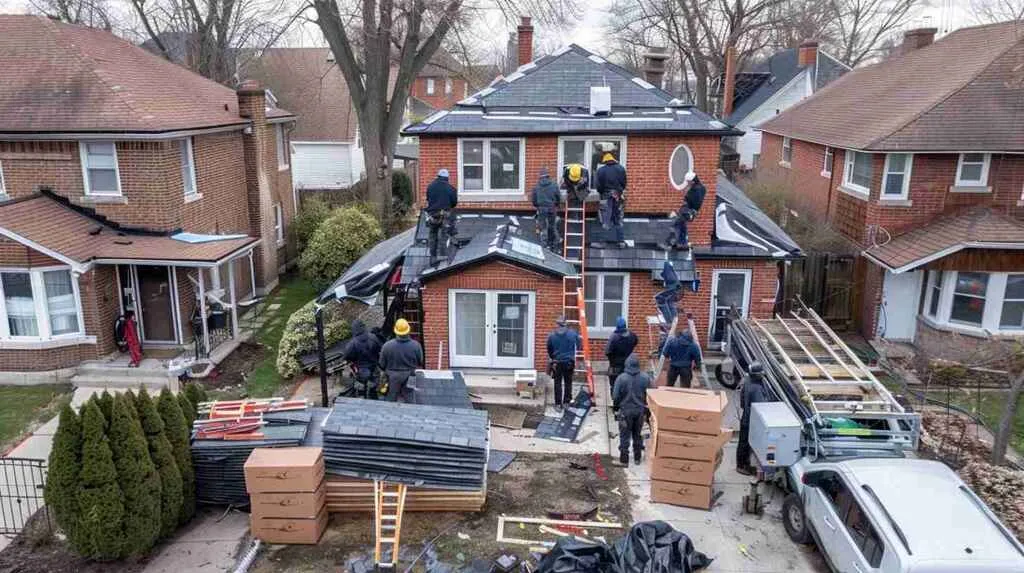
Shingle Roof Cap Queens NY – The Most Exposed Part of Your Roof
Sideways rain in Queens, not the straight-down kind, finds the weakest line on your roof first: that skinny strip of shingles at the very top called the shingle roof cap. Most “mystery leaks” and blown-off shingles don’t come from the big flat areas you see from the street-they start at the ridge, where wind and weather hit hardest and homeowners almost never look closely enough.
Sideways Rain, Skinny Shingles: Why Your Ridge Cap Starts the Trouble
On a corner roof in Astoria last fall, I saw a second-story ceiling stain that had the owner convinced she needed a whole new roof-but when I got up on the ridge, the field shingles were solid and the problem was a four-inch gap under two cap shingles that had curled back during a June heat wave. That tiny gap, which you couldn’t even see from the ground, had been feeding water straight into her bathroom soffit for three months. I tell this story because it’s the same story on half the roofs I inspect in Queens: the shingle roof cap is the part everyone forgets until something drips, and by then they’re scared they need to spend fifteen grand when the real fix is usually a few hundred bucks and a couple hours of careful work.
One August afternoon around 3 p.m., sun beating down on a block in Jackson Heights, I got called to a “ceiling stain” in a third-floor walk-up. The owner was convinced the whole roof was shot. When I got up there, the field shingles were actually in great shape-but the shingle roof cap along the ridge had been pieced together from three different brands, all installed on a day that must’ve been just as hot because they were blistered and curling like old violin labels. A nor’easter had blown rain straight under one loose cap piece, and that tiny gap, not even an inch wide, was feeding that ceiling stain. Replacing ten feet of cap solved what the owner thought was a $15,000 problem.
Let me be blunt: if your shingle roof cap is weak, your whole roof is out of tune. The ridge is the most exposed, wind- and sun-beaten part of the entire structure, and when it starts to fail you’ll see specific symptoms inside-brown stains near the center line of your top floor, a musty smell that only shows up when it’s windy and raining at the same time, or even little drips that seem to appear and disappear without a pattern. Those aren’t random; they’re coming from that narrow ridge strip where weather hits first and hardest.
| Myth | Fact |
|---|---|
| If I see a ceiling stain, my whole roof is shot. | In Queens, most ceiling stains I trace back come from a narrow failure point at the shingle roof cap, not widespread roof decay-repairing or replacing just the ridge line often stops the leak completely. |
| If the shingles I see from the street look fine, the roof cap must be fine too. | The cap shingles are thin, exposed on both sides, and installed on the steepest, windiest line-they can be curled, lifted, or rotting underneath while the field shingles below still look perfect from the sidewalk. |
| Leaks only come in when it’s pouring straight down. | Queens sideways rain and gusty storms drive water sideways under lifted cap shingles; that’s why many homeowners only see drips during windy nor’easters, not gentle summer showers. |
| Ridge vents always mean the roof is properly ventilated and capped. | I’ve seen ridge vents installed without the shingle roof cap properly sealed over them, creating a highway for water instead of an exit for heat-ventilation only works when the cap shingles integrate correctly with the vent system. |
| Roof caps last as long as the rest of the shingles, so I don’t need to think about them separately. | Cap shingles take double the beating-sun from above, wind from both sides, and more thermal expansion than the protected field-so they often fail 5-8 years before the rest of your roof shows serious wear. |
How I Diagnose a Shingle Roof Cap in Queens, Step by Step
When a customer in Flushing asks me, “Why is it always that top line that fails first?” I tell them it’s because the ridge takes the full force of every gust, every UV ray, and every temperature swing with zero shelter-while the big flat sections of your roof have neighboring shingles and underlayment backing them up, the cap is thin, narrow, and exposed on all sides. In Flushing, Astoria, Jackson Heights, and across Queens, our roofs sit between waterways and tall buildings that funnel wind right up and over the ridge, so that skinny strip of shingles gets hammered year-round in a way most homeowners never see from ground level.
One winter, just after a freezing rain storm at about 7 in the morning, I crawled up onto a Woodhaven cape for a retired transit worker who couldn’t figure out why his attic smelled musty only on windy nights. The steep roof was slick, so I moved slow, tapping the ridge with my hammer like I was checking tuning on a string. Halfway across, the hammer went straight through a cap shingle that looked perfectly fine from the sidewalk. The underlayment had rotted under that ridge because the first installer never nailed the caps high enough, and water had been sneaking in for years, drip by drip. He told me he’d had three guys up there who never checked the cap line properly; they all stared at the big surfaces and missed the “thin line” where the roof actually failed.
My On-Roof Shingle Roof Cap Inspection Process for Queens Homes
- Visual scan from the sidewalk – I look for waviness, uneven lines, or any sections where the ridge doesn’t run straight, which usually means the cap shingles or the deck underneath have shifted or sagged.
- Close-up walk along the ridge – Once I’m up safely, I walk the ridge slowly, feeling with a flat bar for soft spots, lifted edges, or places where the cap shingles have pulled away from the nails.
- Gentle tapping test – I tap along the cap line with my hammer, listening for hollow sounds or areas that feel spongy, the same way I used to check if a violin’s soundboard was separating-when it’s solid, you hear a clean thunk; when it’s rotted or delaminating, the sound goes dead.
- Nail placement and count check – I pull up a sample cap shingle (if conditions allow) or closely inspect visible nails to confirm they’re placed at the manufacturer’s spec height and quantity; low nails and skipped nails are two of the most common cap killers I find.
- Ridge vent integration inspection – If there’s a ridge vent, I check the transition between vent and cap shingles for gaps, short overlaps, or places where the installer cut corners-literally-and left the vent exposed to sideways rain.
- Interior confirmation – Before I come down, I’ll check the attic or top-floor ceiling area directly under the ridge for staining, mustiness, or any spots where daylight shows through, which tells me exactly where water has been traveling.
Repair, Retune, or Replace: What Your Shingle Roof Cap Really Needs
$650. That’s the number that makes homeowners breathe easier when they realize their “entire roof” problem is actually a focused shingle roof cap issue that costs hundreds, not tens of thousands. One job that stays with me happened on a blustery March evening in Bayside, about 5 p.m.; the customer was a young couple who’d just bought their first place and were panicking because they’d found shingles in the yard after a storm. From the ladder, I could see the field of the roof was mostly intact, but the factory ridge vent and the shingle roof cap over it were installed like two different songs in two different keys-the cap shingles were too short, cut tight to the vent, so every strong gust from the Long Island Sound had been lifting them like piano lids. I showed the couple, piece by piece, how reworking that cap with the right overlap and nail pattern would “bring the whole roof into harmony,” and they relaxed the minute they saw the problem was real but small and fixable before the next storm.
Typical Shingle Roof Cap Service Scenarios & Price Ranges in Queens, NY
| Scenario | Typical Scope | Estimated Price Range (Queens, NY) |
|---|---|---|
| Small cap patch (under 10 feet) after wind damage | Remove damaged section, install matching cap shingles with proper overlap and sealing | $350-$650 |
| Full ridge cap replacement on a standard 2-family | Strip old caps, inspect and repair any soft deck spots, install new cap shingles full length with sealant | $1,200-$2,200 |
| Reworking cap over existing ridge vent for better overlap and nailing | Pull back improperly integrated caps, adjust or add starter strips, reinstall with correct exposure and fastening | $750-$1,400 |
| Cap replacement plus minor deck repair at soft spots | Replace rotted plywood sections under the ridge, add new underlayment, install fresh cap shingles | $1,500-$2,800 |
| Emergency temporary ridge cap stabilization after a storm | Secure loose caps, apply temporary sealant and fasteners to stop active leaks until full repair can be scheduled | $250-$500 |
Note: Steep pitches, multiple ridge lines, hip intersections, and difficult access in tight Queens lots or shared driveways can push costs toward the higher end of each range. I always walk the roof and give you a clear estimate before any work starts.
| Quick Cap Patch | Full Cap Replacement |
|---|---|
| Best When: Storm damage is isolated to one small section and the rest of the ridge cap shingles are still in good shape with solid nails and no curling. | Best When: The entire ridge shows age, multiple weak spots, curling, or poor original installation; or you’re seeing leaks in more than one area along the top line. |
| Upside: Lower immediate cost, faster completion (often same day), and you keep the rest of your existing cap intact if it’s still performing well. | Upside: Fresh start across the whole ridge, uniform appearance, improved harmony with ridge vents, and you won’t be back up there patching again in a year or two. |
| Downside: If the rest of the cap is near the end of its life, you may need follow-up work soon, and color-matching older shingles can be tricky if your roof is more than 10 years old. | Downside: Higher upfront investment, and if your field shingles are still young you might feel like you’re “over-repairing,” though in reality you’re just addressing the part that wears out first. |
| Expected Lifespan Gain: Typically 3-5 years of additional protection on that patched section, depending on how old the surrounding caps are. | Expected Lifespan Gain: A properly installed full ridge cap replacement should give you 15-20 years of trouble-free performance at the ridge, often outlasting or matching the life of your field shingles. |
Is Your Shingle Roof Cap in Trouble? Simple Checks Before You Call
Here’s the part nobody likes hearing at first, but thanks me for later: ignoring the early warning signs from your shingle roof cap turns a $500 repair into a $3,000 interior ceiling rebuild plus the roof fix. I’ve seen it too many times-homeowners notice a little waviness along the ridge, or a musty smell after a windy storm, and they put it off because the roof “looks fine” from the driveway. By the time they call, water’s been running down inside the walls for months and now we’re not just fixing shingles, we’re talking about drywall, insulation, and mold remediation. Ridge caps should be checked and maintained more often than your field shingles because they fail first, and catching problems early is the difference between a tune-up and a full rebuild.
Let me give you a neighborly insider tip: you don’t need to walk your roof to spot cap trouble-in fact, don’t climb up there if you’re not comfortable or experienced, because a slip on a steep Queens roof is way more expensive than a roofer’s visit. Instead, stand in your yard or across the street and look at the ridge line: is it straight, or does it dip or wave in spots? From an upstairs window (if you have one), use binoculars or zoom in with your phone camera and scan for lifted, cracked, or curling cap shingles. Walk your property after any big windstorm and check for narrow, ridge-shaped shingle pieces in the grass or gutter-those are your cap shingles saying goodbye. And pay attention inside: if you smell mustiness near your top floor only when it’s raining and windy, or you see brown rings or stains along the center line of an upstairs ceiling, your ridge is leaking and you should call before the next nor’easter hits.
Quick Shingle Roof Cap Check for Queens Homeowners
Before you pick up the phone, run through this simple checklist-it’ll help you describe what’s going on and give me a head start when I arrive:
- Look at the ridge line from the sidewalk: is it straight or wavy? Dips and bends usually mean the cap or deck has failed.
- Check for any missing or visibly lifted cap shingles along the top-even one missing piece can let in gallons of water during a storm.
- Scan your yard, driveway, or gutters for narrow, ridge-shaped shingle pieces after wind; those are cap shingles that have blown off.
- Note any ceiling stains or brown rings close to the center line of your top-floor rooms-not near exterior walls, but right under where the ridge sits.
- Smell for mustiness in the attic or upper hallway after heavy sideways rain, especially if the smell fades when it’s dry; that’s a telltale sign of a ridge leak.
- From an upstairs window (if safe), look for cracks, curling, or color mismatches on the ridge line-sometimes the cap shingles age or fail differently than the field below.
- Take photos of any suspicious spots along the ridge to show me when I arrive; it helps me bring the right materials and plan the safest way up.
🚨 Urgent – Call Shingle Masters Now
- Daylight visible at the ridge from inside your attic
- Active dripping or running water under the ridge during storms
- Several cap shingles blown off or missing after wind
- Sagging or spongy ridge area you can see or feel from a window
📅 Can Usually Wait a Few Days
- Light staining on the ceiling that’s not growing fast
- Minor curling of a few cap shingles with no leaks yet
- One small hairline crack on a single cap piece
- Cosmetic mismatched caps without visible water damage inside
Keeping Your Ridge in Tune: Ongoing Care for Shingle Roof Caps in Queens
Picture the ridge of your roof like the spine of a violin-it carries all the tension, holds the structure together, and if even one peg or seam is out of alignment, the whole instrument sounds wrong. Your shingle roof cap works the same way: the nails, the overlaps, the way the caps integrate with ridge vents, they all have to “play in the same key” or you’ll get leaks, blow-offs, and premature failure. I’m not just being poetic here; after 19 years on Queens roofs I can tell you that a quick, regular ridge check is the best “tuning” you can do for your roof, and it costs almost nothing compared to the damage you avoid when you catch a problem before it becomes a crisis.
Queens weather patterns stress the ridge harder than almost any other part of your home. Spring nor’easters bring sideways rain and 40-mph gusts that lift cap shingles like they’re testing how well they’re nailed down. Humid summers bake the ridge from above while trapped attic heat pushes from below, curling and cracking the cap shingles faster than the field. Winter freeze-thaw cycles sneak water under any loose edge, expand it into ice, and pry the caps apart nail by nail. In neighborhoods like Elmhurst, Bayside, Flushing, and Astoria-where older two-families sit close together and wind funnels between buildings-the ridge takes an even bigger beating. A predictable maintenance rhythm, where you check the cap line every spring and fall, prevents the surprise leaks that turn a quiet Tuesday into an emergency call and a scramble to find a tarp before the next storm rolls in.
| Interval | Recommended Ridge Cap Tasks |
|---|---|
| Every Spring |
• Visual inspection from the ground for waviness, lifted pieces, or debris on the ridge • Check gutters and yard for any cap shingle fragments after winter storms • Schedule a professional walk if you saw any stains or smelled mustiness over the winter |
| Every Fall |
• Clear any branches, leaves, or moss buildup along the ridge before winter • Look for curling or cracking from the summer heat • Have a roofer do a quick tune-up of loose nails or sealant if the cap is older than 10 years |
| After Major Wind or Nor’easter Events |
• Walk your property looking for blown-off cap pieces • Check the ridge line from across the street for any new gaps or lifted sections • Call for an inspection if you heard banging or scraping sounds on the roof during the storm |
| At 10-15 Years of Roof Age |
• Plan a proactive ridge cap replacement even if your field shingles still look good • Get a photo-documented inspection of the entire cap line and any ridge vents • Budget for replacement before the caps fail completely and cause interior damage |
Why Queens Homeowners Trust Me With Their Shingle Roof Caps
✓ 19+ years on Queens roofs, from Astoria to Bayside
✓ Licensed and fully insured in New York
✓ Specialized experience with shingle roof caps and ridge vents
✓ Fast response in neighborhoods from Flushing to Jackson Heights
✓ Clear, photo-documented explanations of every cap issue before work starts
Common Shingle Roof Cap Questions From Queens Homeowners
How do I know if it’s just my shingle roof cap or my whole roof that needs work?
If your leaks or stains are centered under the ridge line, happen mostly during windy rain, and your field shingles still look flat and intact from the ground, it’s almost always a cap-only issue. When I come out, I’ll inspect both the cap and the field and show you photos so you can see exactly what’s failing and what’s still solid-no guessing, no upselling.
Can you match my existing shingles when you replace the cap?
Most of the time, yes. I keep a wide range of cap shingle colors and styles, and manufacturers still produce matches for popular lines going back 15-20 years. If your shingles are discontinued or very old, I’ll bring samples to your house so you can see the closest match in real daylight before we start-I won’t leave your roof looking like a patchwork quilt.
Is it safe for me to go up and check the ridge myself?
Honestly, no-not unless you’re experienced with ladders, comfortable with heights, and have proper fall protection. Queens roofs are often steep, slippery when wet, and surrounded by tight spaces or shared driveways that make safe ladder placement tricky. A fall costs way more than a roofer’s inspection visit. Stick to ground-level and window checks, and let me do the climbing-that’s what I’m insured for.
How long does a typical ridge cap repair or replacement take on a Queens house?
A small patch can be done in a couple hours if the weather’s good and access is straightforward. A full cap replacement on a standard two-family usually takes half a day to a full day, depending on the ridge length, pitch, and whether we find any deck repairs once we pull the old caps. I’ll give you a clear timeline when I estimate the job, and I always clean up and haul away debris the same day.
Do you offer photos or videos of the ridge before and after you work on it?
Absolutely. I take before photos to show you exactly what’s failing-lifted caps, rotted spots, poor nailing-and after photos so you can see the finished work and know it was done right. If you want, I’ll walk you through the photos on my phone right there in your driveway so you understand what we fixed and why it matters. No roofer mystery here.
A focused shingle roof cap inspection can quickly show you whether you need a small retune-a few nails, a little sealant, and you’re good to go-or a fuller replacement that gives you a fresh, weather-tight ridge for the next 15-20 years. Either way, you’ll know exactly what’s going on up there and what it’ll cost before we start any work.
If you’re in Queens, NY and you’ve noticed stains, heard banging during windstorms, or you just want peace of mind before the next nor’easter, call Shingle Masters for a ridge-line inspection and a photo-documented estimate. I’ll come out, walk your roof, and show you in plain language what your shingle roof cap really needs-no drama, no surprises, just clear answers and solid work.