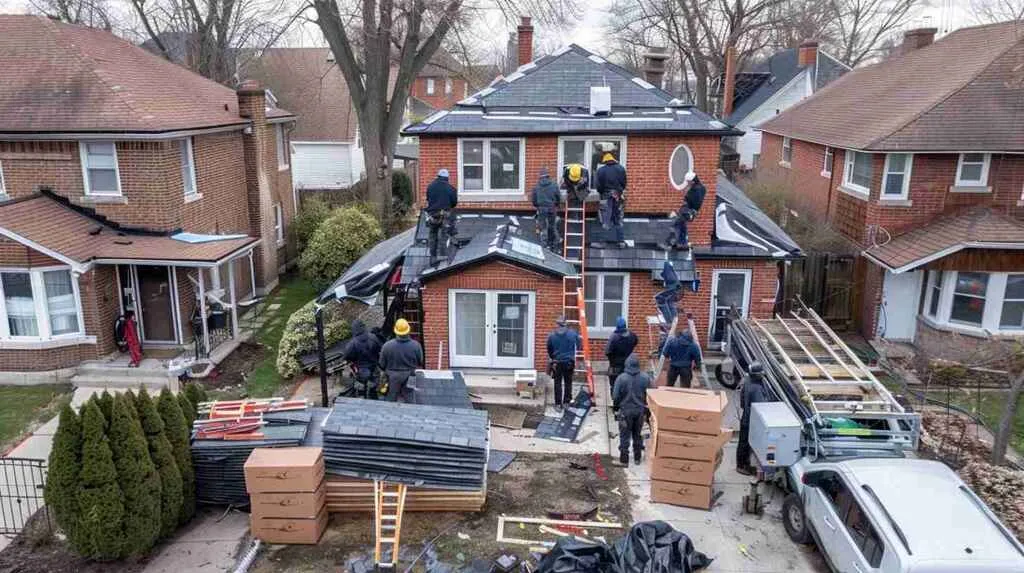
Roof Shingle Cutter Queens NY – What Roofers Use and Why | Free Estimates
Unexpected truth from 17 years on Queens roofs: the cheapest tool on my truck-a humble roof shingle cutter-often saves homeowners the most money in wasted shingles and labor. I’m Carla “Measuring Tape” Ruiz, and I’ll give you the straight story about why that boring-looking guillotine tool matters way more than you think, translated twice so you actually understand it: once in contractor language, then again like I’m explaining it to my niece who just bought her first rowhouse in Astoria.
Why the Humble Roof Shingle Cutter Matters on Queens Roofs
On 90% of the Queens roofs I step onto, the first thing I look at is the cut line along the rakes and valleys. Think of a roof shingle cutter like a paper guillotine in an office or the deli slicer my family used in Corona-boring to look at, but you notice instantly when it’s not there and someone’s trying to do the same job with a steak knife or rusty scissors. One August afternoon in Jackson Heights, it was 96 degrees and the shingles were practically melting under my boots. The homeowner was staring at a pile of wasted shingles from the last crew, all jagged cuts and broken tabs, and asked me why the roof looked “crooked from the sidewalk.” I pulled out my shingle cutter, set it on his recycling bin, and showed him how the last guys clearly used a dull utility knife on hot material-every cut wandered. We recut all the rake edges with the proper roof shingle cutter and a speed square; by sunset, you could literally see a straight, clean line from halfway down the block. That day sold me on never letting anyone on my crew “just eyeball it” with the wrong blade again.
Here’s what a Queens homeowner actually sees from the sidewalk and on the bill when a pro uses the right cutter versus a rusty utility knife: straight rake lines that stay sharp in listing photos, valleys that don’t look wavy, and fewer extra bundles on the invoice because we’re not throwing half-shingles in the dumpster. The cut quality affects your manufacturer’s warranty-sloppy edges around rakes, valleys, and penetrations can lead to blow-offs and leaks that put your coverage at risk. In dense Queens neighborhoods where you’re three feet from the next house and everybody notices everything, crooked cut lines jump out immediately, especially on darker shingles.
Fast Facts About Roof Shingle Cutters on Queens Homes
What Roof Shingle Cutters Pros Actually Use in Queens, NY
Let me be blunt: if a roofer tells you they “just use whatever knife is in the pouch,” that’s your red flag. In my years working all over Queens-Astoria rowhouses, Bayside capes, Jackson Heights multi-families-I’ve seen what actually shows up on trucks: table-style cutters that look like mini guillotines, portable clamp cutters that fit in a bed liner, and way too many cheap knives-only crews that leave wavy rake lines. One November morning in Bayside, I had a DIYer call me in a panic at 7:30 a.m. because he’d started a weekend roof project using kitchen scissors and a Harbor Freight knife. The wind had kicked up overnight, and half his mis-cut starter shingles had peeled back like potato chips. When I got there, I laid a strip of shingle on his tailgate, clamped it in my portable cutter, and made a perfect starter strip in one clean slice. He actually stopped and said, “That’s it? That’s what I was fighting all day?” We salvaged about 40% of what he’d butchered by re-squaring them with the cutter, instead of him buying all new bundles.
Different cutters work better for different roof shapes, and you’ll want to understand why. On tight Astoria driveways where you’re squeezed between parked cars, a portable clamp-style cutter makes sense because the crew can move it fast. For larger capes in Whitestone or Bayside with lots of straight runs, a table-style cutter in the driveway becomes a production line for starter strips and rake pieces. And those utility knives? Great for notching around vents and pipes, awful for long valley cuts unless the guy holding it is a craftsman with 20 years of muscle memory. Think kitchen knives versus a deli slicer-you can slice turkey with a paring knife, but you’re gonna waste half the meat and take forever.
| Tool Type | Best Use Case on Queens Roofs | Pros | Cons |
|---|---|---|---|
| Table-Style Shingle Cutter (Guillotine Type) | Pre-cutting starter strips and rake pieces for larger roofs in Bayside, Whitestone, and Maspeth | Very straight cuts, repeatable measurements, fast on big batches | Takes more space; slower to move between set-up locations |
| Portable Clamp-Style Shingle Cutter | Tight driveways and small jobs in Astoria, Jackson Heights, and Corona where space is limited | Lightweight, fits in truck bed, good control with fewer offcuts | Not as fast as table-style for very large volumes |
| Standard Utility Knife with Hook Blades | Detail work around vents, pipes, and flashing anywhere in Queens | Cheap, versatile, good for curves and small notches | Easy to wander off-line, slower for long straight cuts, depends heavily on skill |
| Improvised Tools (scissors, dull knives, etc.) | Never recommended-usually seen on rushed or inexperienced DIY jobs | Low upfront cost because it uses household tools you already own | Jagged cuts, tons of waste, risk of shingles lifting and blowing off |
Signs Your Roofer Is Using the Right Cutting Tools
- ✅ You see a dedicated shingle cutter or cutting station set up in the driveway or on the lawn.
- ✅ Crew uses a speed square or straightedge when cutting by hand with knives.
- ⚠️ Roofers are free-handing long cuts on hot shingles with no guide.
- ⚠️ Scrap pile is full of short, jagged, unusable pieces.
- ✅ Starter strips look factory-straight, not like torn cardboard.
How the Right Cutter Saves You Money, Time, and Headaches
I still remember a cold, windy Saturday in Flushing where a $120 shingle cutter saved us almost a full bundle in waste. The weirdest one was a twilight job in Astoria on a three-family where the architect had drawn this crazy diagonal valley detail. My foreman swore we could “wing it” with hand cuts on the roof. I set up a shop light in the driveway, dragged our table-style shingle cutter out of the truck, and mocked the valley angle right there on a scrap of plywood. We pre-cut every valley shingle to that exact angle before we ever climbed up. While another crew on the next block was cursing in the dark with utility knives, we were snapping in pre-cut pieces like Tetris and finished a full hour earlier, with almost no offcuts in the dumpster. In contractor language, we minimized waste, reduced labor hours, and avoided a callback. In homeowner language: fewer bundles on the invoice, crew left on time instead of expensive overtime, and no follow-up visit because a cut came loose in the first windstorm.
That $120 tool literally saved hundreds that afternoon-and it keeps saving money on every cut-heavy Queens roof.
Now, here’s where this really matters for you: before you sign anything, ask your roofer where they plan to do their cutting and what tool they’ll use. Listen for a specific answer-“We’ll set up our table-style cutter in your driveway and pre-cut all the valley and rake pieces,” not vague stuff like “we got what we need.” If they can’t explain their cutting setup, they shouldn’t be cutting into your roof. On a multi-family in Jackson Heights with complex valleys and dormers, a crew with the right cutter will order maybe one extra bundle for safety. A knives-only crew? They’ll order three extra bundles “just in case” and you’re paying for that cushion whether they use it or toss it.
✓ Pros
- DIY can feel cheaper up front if you only count bundles, not mistakes.
- Hiring a pro with the right cutter means straighter lines and less visible wobble along rakes and valleys.
- Pros plan cuts in batches so your job finishes faster and with fewer weather delays.
✗ Cons
- DIY cutting with household tools often leads to wasted bundles and wind-lifted starter courses.
- Hiring the cheapest crew that only uses knives can mean more waste and a wavier finished look.
- Trying to fix bad cuts later usually costs more than doing it right once with the proper cutter.
Simple Checks Before You Hire a Roofer in Queens
When I sit at a kitchen table with a homeowner, I’ll usually start by asking, “Do you care more about how it looks from the street, or how long it lasts?” The answer is always “both,” and that’s exactly what you get when the crew uses the right roof shingle cutter and layout. I won’t work with crews that “just eyeball it”-that’s my personal line. In dense Queens neighborhoods where you’re literally three feet from the next stoop and everyone’s got opinions about your property, neighbors really do notice crooked cut lines. A wavy rake edge shows up in every real estate photo and every time you pull into the driveway. And here’s the thing: sloppy cuts don’t just look bad, they age badly. Tabs can lift in wind, water can wick under mis-trimmed valleys, and suddenly your “good enough” roof is leaking in year three instead of lasting fifteen.
So here’s your action plan: before the first ladder hits your gutter, have a driveway conversation. Ask your roofer what kind of roof shingle cutter they’ll use for rakes, starters, and valleys-listen for a specific tool name, not just “a knife.” Ask where they’ll set up their cutting station: driveway, yard, scaffolding, whatever, but it should be part of the plan. Confirm they’re using a speed square, straightedge, or jig for repeated cuts, not free-handing measurements on hot shingles. Look for a dedicated cutter being unloaded with the ladders, not pulled out halfway through when they’re already struggling. And ask flat-out, “What’s your plan for minimizing shingle waste on this cut-heavy roof?” A good crew will give you a detailed answer. A bad one will mumble something about “we’ll figure it out.”
✓ What to Ask About Shingle Cutting Before Hiring a Queens Roofer
- Ask: “What kind of roof shingle cutter do you use for rakes, starters, and valleys?” (Listen for a specific tool name, not just “a knife.”)
- Ask: “Where will you set up your cutting station on my property?” (Driveway, yard, or scaffolding should be part of the plan.)
- Confirm: They use a speed square, straightedge, or jig for repeated cuts, not just eyeballing measurements.
- Look for: A dedicated cutter being unloaded with the ladders, not pulled out halfway through when they’re already struggling.
- Ask: “What’s your plan for minimizing shingle waste on this cut-heavy roof?”
Why Queens Homeowners Trust Shingle Masters with Cut-Heavy Roofs
Straight Answers About Shingle Cutters, Queens Weather, and Your Roof
Here’s the truth nobody puts in the brochure: a roof can be perfectly watertight and still look like a wavy mess if the cuts are sloppy. Even worse, bad cuts look wavy and can age badly, especially under Queens sun, wind, and winter freeze-thaw cycles-which means you’re staring at an eyesore that might not even last through its warranty period.
Do I really need to care what tool my roofer uses to cut shingles?
Yes, because the tool affects how straight, consistent, and sealed your edges and valleys are. In Queens, where roofs are packed tight and visible from the sidewalk, you’ll see the difference every time you walk home.
Can a bad cut along the edge actually cause a leak or just look ugly?
Both. Ugly, jagged cuts can expose more asphalt to UV and wind, and if they’re too short or over-trimmed, water and wind can get under the shingle tabs. A proper cutter lets us trim tight without over-cutting.
Is a roof shingle cutter helpful in winter or only in summer heat?
It’s actually more important in cold weather because shingles are stiffer and more likely to crack if you try to force them. A cutter gives a clean break without tearing the mat, even when it’s chilly in Bayside or Whitestone.
If another roofer already mis-cut my shingles, can you salvage them with your cutter?
Many times, yes. If the original cuts aren’t too short, we can re-square and repurpose mis-cut shingles with a proper cutter, saving you from buying as many new bundles.
How fast can Shingle Masters come look at my Queens roof and give an estimate?
Most of the time we can get to you in 24-48 hours for a free estimate anywhere in Queens, and we always bring our cutters so we can show you exactly how we’ll handle your edges and valleys.
Beware of Roofers Who Won’t Talk About Their Cutting Tools
If a contractor gets defensive or vague when asked about how they cut shingles, it’s a sign they may rush the job or lack proper equipment. A pro should be able to explain their process clearly and show you the tools that’ll be used on your roof.
If a roofer can’t explain their cutting setup in one clear sentence, they shouldn’t be cutting into your roof. Call Shingle Masters for a free, on-site estimate anywhere in Queens, and I’ll literally show you the roof shingle cutter sitting in the driveway before a single shingle goes down-because you deserve to see the tool that’s going to protect your home and your curb appeal for the next 20 years.