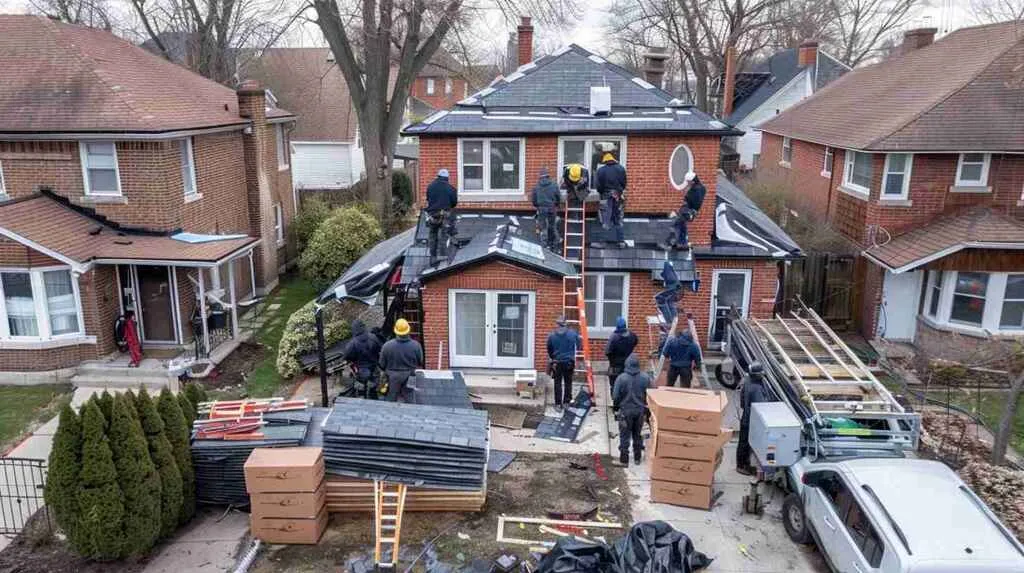
Commercial Shingle Roofing Contractor Queens NY – Licensed Crew
Blueprint for a legitimate commercial shingle roofing system in Queens, NY: expect to pay somewhere between $550 and $800 per square (one hundred square feet) for work that actually meets code, uses commercial-grade materials, and passes inspection the first time. That range isn’t inflated-it’s what it costs to tear off old material, repair the deck properly, install commercial underlayment, flash every edge and penetration, nail down manufacturer-rated shingles per spec, and haul debris legally. When a bid comes in way under that range, you’re looking at someone who’s planning to skip one or more of those steps, and in my eighteen years working Queens roofs, I’ve watched every single one of those cheap jobs fail during the next big storm or the first insurance inspection.
Real Queens Commercial Shingle Roof Pricing: What a Legit Bid Looks Like
On a flat Tuesday morning in Maspeth, I watched an insurance adjuster run his finger under a lifted shingle and shake his head. The building owner had gone with the lowest bid three years earlier-$200 per square under everyone else-and the contractor had skipped proper deck fastening and used residential-grade underlayment on a three-story warehouse. The adjuster pointed to water stains inside the shipping department and told the owner that his claim was denied because the roof didn’t meet commercial occupancy standards. That owner ended up paying for the cheap roof and a full replacement, plus the damaged inventory. The real cost of “saving money” on a commercial shingle roof isn’t the materials someone didn’t use-it’s the inspection failures, the voided warranties, and the emergency calls at 2 a.m. when wind peels your roof like opening a can of sardines.
So what drives that $550-$800 per square range in Queens? Deck condition is the biggest variable-if your plywood or OSB is rotted or bouncy, we’re re-decking before a single shingle goes down, and that’s labor and material. Access matters: a one-story strip mall with good truck access costs less per square than a four-story mixed-use building in Astoria where we need a crane and permits. Height, pitch, and the number of HVAC units or skylights all add time. Then you’ve got Queens-specific code requirements: DOB wants proper ventilation ratios for commercial spaces, insurers demand wind-rated assemblies that can handle nor’easters off the Atlantic, and manufacturers won’t honor warranties unless you follow their exact nailing patterns and underlayment specs. Every corner you cut to get below that per-square range is a corner that shows up later-either when the inspector red-tags your Certificate of Occupancy or when the next storm turns your roof into a sales flyer blowing down Queens Boulevard.
Typical Commercial Shingle Roofing Costs in Queens, NY (Per Job Scenario)
| Scenario | Approx. Roof Size (Squares) | Building Type | Roof Condition | Estimated Price Range (Queens, NY) |
|---|---|---|---|---|
| Small retail building | 18 squares | One-story storefront, Jackson Heights | Moderate wear, deck intact | $9,900-$14,400 |
| Mixed-use building | 32 squares | Three-story, Astoria, retail + apartments | Two layers to remove, some deck repair | $17,600-$25,600 |
| Industrial warehouse | 52 squares | Low-slope commercial, Maspeth | Significant deck damage, HVAC obstructions | $28,600-$41,600 |
| Medical/office building | 40 squares | Two-story professional center, Forest Hills | Good deck, one layer tear-off | $22,000-$32,000 |
| Multi-tenant strip mall | 65 squares | One-story retail strip, Ridgewood | Minimal deck work, easy access | $35,750-$52,000 |
Pricing assumes full tear-off, deck inspection/repair, commercial underlayment, ice & water shield, code-compliant flashing, manufacturer-rated shingles, proper ventilation, and legal disposal. Jobs with cranes, permits, or structural upgrades will add to these ranges.
⚠️ Bids That Are Too Low
- Skipping deck repair: Contractor nails shingles over rotted or bouncy plywood, creating a roof that fails the first time someone walks on it or an inspector checks bounce.
- Using residential shingles on commercial buildings: Residential-grade materials don’t meet commercial wind ratings or fire codes, and your insurer can deny claims if they find out.
- Improper or missing underlayment: Cheap felt paper instead of commercial synthetic underlayment, or no ice & water shield at eaves and valleys where leaks start.
- Ignoring code-required ventilation: Commercial occupancies need balanced intake and exhaust; skipping it leads to heat buildup, mold, voided shingle warranties, and failed inspections.
What a Proper Commercial Shingle System Includes (Beyond Just Shingles)
Here’s the part most commercial property owners don’t like to hear: if your shingle roof bid sounds like a bargain, something structural is usually getting ignored. When you look up at a finished commercial shingle roof in Astoria or Jackson Heights, all you see is rows of uniform tabs, maybe some ridge caps and flashings. But think of your building like a stage set: if the supports behind the scenery are weak, it doesn’t matter how pretty the backdrop (your shingles) look. A proper commercial shingle assembly starts below the visible surface-at the structural deck, which has to be solid and fastened correctly or everything above it will move and fail. On top of that deck you need commercial-grade synthetic underlayment that can handle foot traffic during install and won’t tear in wind, plus ice & water shield along eaves, valleys, and every penetration where water wants to sneak in. Then metal flashing and edge metal that actually channels water off the roof instead of letting it wick under the shingles. Only after all that hidden support is in place do the shingles go down, and even those need to be commercial-rated for wind and nailed per the manufacturer’s exact schedule or the warranty is void before the first storm. Around 6:30 a.m. one cold November, I met a grocery store owner in Jackson Heights in the dark parking lot because his night manager found shingles on the ground. Turned out the previous installer had mixed residential and commercial-grade materials to save money, and the first big wind off the East River ripped them loose. I walked the owner row by row with my headlamp, explaining uplift ratings and nailing patterns like I was calling stage directions, and we ended up doing a full commercial shingle system that survived the next nor’easter without losing a single tab.
In Queens, DOB inspectors and insurance adjusters don’t just glance at your roof-they climb up, they pull shingles, they check nailing depth and spacing, and they look at the underlayment seams. If they find a mix of residential materials on a commercial building, or if the wind rating doesn’t match the zone requirements, your Certificate of Occupancy gets held up and your insurer walks away from storm claims. Manufacturer specs aren’t suggestions-they’re the contract that keeps your warranty alive. A commercial shingle rated for 110 mph winds requires six nails per shingle in a specific pattern; use four nails or the wrong placement and you’ve just turned a $300 shingle bundle into expensive decorative paper. When I spread the manufacturer’s spec sheet on the hood of my van, the first thing I circle is the wind rating and warranty fine print. I’ll tell an owner: ask your contractor to do the same thing right there in the parking lot. If they hem and haw or say “we always do it right, don’t worry,” that’s your signal they’re planning to skip steps. A real commercial crew will pull out the spec sheet, show you the highlighted nailing schedule, and explain how every fastener placement ties into the warranty and the wind performance you’re paying for.
Core Layers of a Code-Compliant Commercial Shingle Roof in Queens
Residential vs. Commercial Shingle Assemblies in Queens
| Component | Cut-Rate Mix (What Fails) | Proper Commercial System (What Passes) |
|---|---|---|
| Shingle Type & Rating | 3-tab residential shingles with 60-70 mph wind rating; no commercial fire or impact certification; voids insurance and fails DOB inspection for commercial occupancy | Architectural shingles rated 110+ mph, Class A fire rating, commercial warranty; meets NYC code and insurer requirements for multi-tenant/commercial use |
| Underlayment | Cheap #15 felt paper that tears during install and degrades in UV; no ice & water shield or only minimal coverage; fails in first wind event | Commercial synthetic underlayment (tear-resistant, UV-stable) across entire deck; ice & water shield at all eaves, valleys, and penetrations per manufacturer spec |
| Nailing Pattern & Wind Performance | Four nails per shingle, random placement, often pneumatic overdriven or missed; doesn’t meet manufacturer warranty requirements; shingles lift in moderate wind | Six nails per shingle in manufacturer-specified pattern and depth; hand-checked for proper fastening; meets 110+ mph uplift rating and keeps warranty valid for 20-30 years |
Step-by-Step: How We Install a Commercial Shingle Roof That Passes in Queens
Walk onto one of our Queens jobsites and you’ll see the process unfold like stage cues-each step happens in order, nothing skipped, because the next step depends on the one before it. We start with a full inspection and measurement, marking every penetration, noting deck condition, and photographing existing damage so there’s no confusion later about what we found versus what we fixed. Then comes tear-off: we section the roof into workable areas, strip old shingles and underlayment down to bare deck, and use tarps and magnetic sweepers to keep debris contained-because a commercial building can’t afford nails in the parking lot or shingle grit clogging a storm drain. Once the deck is exposed, we walk every square foot checking for soft spots, rot, or improper fastening, and we re-deck or sister in new plywood wherever it’s needed, fastening to code with the right nail spacing. The toughest one was a nonprofit daycare in Jamaica, middle of a brutal August heat wave, when the roof crew before us had “finished” the job but skipped proper ventilation to cut corners. Inside, the classrooms felt like a toaster oven. I still remember standing in the playroom, watching the ceiling tiles bow, explaining to the director why the cheapest bid they’d accepted was now costing them double. We redesigned the whole shingle assembly-baffles, vents, high-reflectance shingles-and I promised her the electric bill would drop. When she called me in December to say it did, I saved that ConEd bill copy in my truck for months as proof for other owners. After decking, we roll out commercial synthetic underlayment with proper overlaps and fastening, apply ice & water shield at every eave and valley, install drip edge and flashing around every penetration and transition, then start the shingle courses from the bottom up, following the chalk lines and manufacturer’s exposure exactly. Every shingle gets six nails in the right spots, every row gets checked for alignment, and ridge vents go in last with baffles to ensure airflow. Final step: we walk the roof with the owner or property manager, show them the completed assembly, hand over all warranty paperwork, and schedule the DOB or insurance inspection if needed-because a roof that passes inspection the first time saves you weeks of delays and thousands in callbacks.
Our Queens Commercial Shingle Installation Process
Why Queens Owners Bring Shingle Masters Back
- NYC license & insurance: Fully licensed, bonded, and insured for commercial roofing work in all five boroughs; we carry the coverage your building requires and can provide certificates to your insurer or lender.
- 18+ years commercial shingle experience in Queens: We’ve worked every neighborhood and building type in Queens-warehouses, medical offices, mixed-use, retail-and we know what local inspectors and insurers expect.
- Familiarity with DOB and insurer inspection requirements: We build roofs that pass inspection the first time, with proper materials, fastening, and documentation, so you don’t lose weeks waiting for re-inspections or variance approvals.
- Written workmanship warranty with manufacturer-backed shingle warranty: Our labor warranty covers installation defects, and we register your shingle warranty directly with the manufacturer so you have both layers of protection for decades.
Is It Time to Call a Commercial Shingle Roofing Contractor in Queens?
When was the last time you actually climbed up and looked at your roof after a storm, or read through the notes from your last insurance inspection? Not every shingle issue is an emergency, but certain signs on a Queens commercial roof mean it’s time to call Shingle Masters before the problem doubles in cost or shuts down your building.
Urgent – Call Shingle Masters Now
- Active leaks during or after rain: Water coming through ceilings, walls, or around HVAC equipment means immediate damage to inventory, electronics, or structure.
- Shingles missing or lifted after a storm: Exposed underlayment or deck won’t survive the next rain; every day you wait multiplies water damage and repair cost.
- Interior ceiling sagging or staining: Visible interior damage means the roof has been leaking for a while; structure and insulation are likely compromised.
- Puddles or standing water near electrical panels: Water and electricity don’t mix; this is a safety hazard that needs emergency attention before someone gets hurt or equipment shorts out.
Can Wait for a Scheduled Roof Assessment
- Minor granule loss in gutters: Normal aging; worth noting during a scheduled inspection but not an emergency unless large bald spots are visible on shingles.
- Small rust spots on flashing: Surface rust on older metal flashing can be monitored and addressed during planned maintenance or replacement cycles.
- Age-related wear (roof is 15-20+ years old): If there are no leaks but the roof is nearing end of life, schedule an assessment to plan replacement before the next major storm season.
- Planning an upcoming building renovation: If you’re already planning HVAC upgrades, facade work, or tenant improvements, coordinate roof work into that schedule to save on mobilization and permitting.
Quick Checks Before You Call Shingle Masters
You don’t need to climb onto the roof-here’s what you can safely do from the ground or inside to help us respond faster:
- Note active leak locations inside: Mark ceiling stains, drips, or wet spots with tape and take photos; this helps us target inspection areas and estimate scope quickly.
- Take photos from the ground: Use your phone to photograph missing shingles, sagging areas, or debris in gutters; exterior views help us assess urgency before we arrive.
- Check last roof paperwork or warranty: Dig out any previous invoices, warranties, or inspection reports; knowing what materials are up there and when they were installed saves time and avoids surprises.
- Look at last DOB inspection report: If you had a recent inspection, review any roof-related notes or violations; we can address those during our assessment and quote.
- Confirm roof access details and hours: Let us know if we need keys, gate codes, or tenant coordination; knowing access restrictions ahead of time lets us schedule efficiently and avoid delays.
Common Questions Queens Owners Ask About Commercial Shingle Roofs
From Maspeth warehouses to Ridgewood bakeries, building owners tend to ask the same practical questions about lifespan, disruption, and inspections. I still remember a bakery owner in Ridgewood asking me, “Luis, do I really need all this underlayment stuff if the shingles look good on top?” I pulled out a roof diagram on the back of his own pastry box and drew the shingle as the visible actor on stage, then sketched the underlayment, deck, and flashing as the unseen rigging holding everything together. The shingles are what customers and inspectors see, but it’s the hidden support that keeps your building dry when the nor’easter hits at 2 a.m. and tries to peel that roof like a sardine can. So yeah-you need the underlayment, and you need it done right, because every corner cut in the hidden layers shows up the first time wind and water test your roof.
Queens Commercial Shingle Roofing FAQs
What’s the typical lifespan of a properly installed commercial shingle roof in Queens?
A commercial shingle roof installed with the right materials, proper deck prep, and manufacturer-compliant nailing will last 20-30 years in Queens, depending on shingle quality and maintenance. Architectural shingles with high wind ratings and good ventilation tend to hit the upper end of that range. Roofs that were done cheap-skipped underlayment, wrong nailing, no ventilation-often fail in 8-12 years, sometimes sooner if a big storm exposes the shortcuts. Regular inspections after major weather events and clearing debris from valleys can push a good roof well past 25 years.
How noisy and disruptive is commercial shingle installation for tenants or businesses below?
Shingle roofing is louder than you’d like but quieter than most people fear. Tear-off is the noisiest phase-lots of scraping and prying-and usually takes one to three days depending on roof size. Shingle installation itself involves nail guns, so there’s rhythmic tapping, but it’s not constant jackhammering. We schedule noisy work during business hours when possible and coordinate with tenants if you have medical offices, daycare, or retail that can’t tolerate disruption at certain times. Most businesses stay open during the work; we just ask that you warn tenants in advance and give us a contact for any issues.
Can you roof over existing shingles on a commercial building to save money?
In most cases, no-and even when code technically allows it, it’s a bad idea. NYC building code generally requires a full tear-off for commercial roofs so inspectors can verify deck condition, and most commercial shingle warranties are void if you install over old layers. Leaving old shingles in place traps moisture, hides deck damage, and adds weight that wasn’t in the original structural design. The money you “save” on disposal and labor gets eaten up when the new shingles fail early or when an inspector red-tags the job and forces you to tear it all off anyway. We always recommend full tear-off for commercial buildings in Queens.
How do you handle inspections with insurers and the NYC Department of Buildings?
We build every roof as if an inspector is already standing next to us, because in Queens they often are. For DOB, we handle all permit applications, coordinate inspections at the right phases (deck, underlayment, final), and make sure our work matches the approved drawings and code requirements so you pass the first time. For insurance inspections, we provide detailed documentation-material receipts, manufacturer spec sheets, photos of each layer-and we’re happy to walk the roof with an adjuster or engineer if they want to verify wind ratings or fastening. We’ve been doing this long enough that most local inspectors recognize our work and know we don’t cut corners, which speeds up approvals and keeps your project on schedule.
How does Queens weather-wind, nor’easters, summer heat-affect shingle material choices and warranties?
Queens sits right in the path of Atlantic nor’easters and gets hit with high winds, driving rain, and occasional tropical storm remnants, so wind rating is the first thing we look at when selecting shingles. We use commercial architectural shingles rated for at least 110 mph sustained winds, which meets code and keeps your warranty intact. Summer heat is another factor-dark shingles on a flat or low-slope roof can push attic temps over 150°F, which is why we design ventilation systems with proper intake and exhaust and sometimes recommend high-reflectance or “cool roof” shingles to cut cooling costs. Most manufacturer warranties are voided if ventilation is inadequate or if shingles are installed outside temperature ranges, so we pay close attention to weather windows during installation and make sure every assembly meets both performance and warranty requirements for Queens conditions.
Myths Queens Owners Believe About Commercial Shingle Roofing
| Myth | Fact |
|---|---|
| “The cheapest bid is good enough-shingles are shingles.” | A bid that’s hundreds of dollars per square under the market is skipping deck repair, using residential materials, or ignoring code requirements. You’ll pay for that “savings” in failed inspections, voided warranties, and emergency repairs after the first storm. Legitimate commercial shingle work in Queens costs $550-$800 per square for a reason. |
| “Residential shingles are fine on small commercial buildings to save money.” | Residential shingles don’t meet commercial wind ratings, fire codes, or insurance requirements. If an adjuster finds residential materials on a commercial occupancy, your claim gets denied and your Certificate of Occupancy can be challenged. Small building or not, commercial use requires commercial-rated materials. |
| “Underlayment is optional-it’s just there to keep the deck dry during install.” | Underlayment is a critical secondary water barrier that protects your building if shingles ever fail, blow off, or develop leaks. It’s required by code, by every shingle manufacturer’s warranty, and by insurers. Skipping it or using cheap felt instead of commercial synthetic is a guaranteed path to water damage and a voided warranty. |
| “Ventilation only matters for houses, not commercial spaces.” | Commercial buildings-especially mixed-use, retail, and office spaces-generate heat and moisture that can destroy shingles from below if ventilation isn’t balanced. Poor ventilation voids shingle warranties, causes premature aging, leads to mold and structural rot, and drives up HVAC costs. Proper ridge and soffit vents are just as critical on a commercial roof as they are on a house, sometimes more so. |
The blunt truth is that commercial roofs in Queens don’t fail in the middle of a calm, sunny day-they fail at 2 a.m. when the rain is sideways and nobody’s around. A proper commercial shingle system is about the hidden structure-the solid deck, the tear-resistant underlayment, the code-compliant flashing, the manufacturer-spec nailing-more than the visible shingles themselves. If you’re tired of patching problems or wondering whether your current roof will survive the next nor’easter, call Shingle Masters and let’s walk your roof together, line by line, before the next inspector or storm shows up and does it for you.