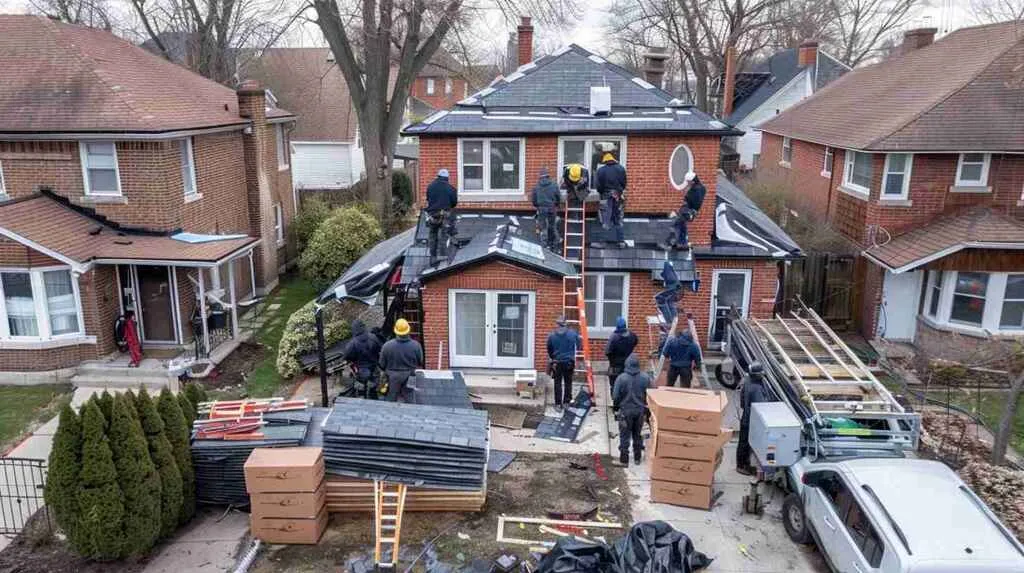
Commercial Shingle Roof Replacement Queens NY – Full Service | Free Quotes
Blueprint first: most Queens commercial owners think shingle replacement is a cheap, quick fix-the kind of thing you can put off or throw $2,000 at to make it go away. It’s not. Real projects typically run $6-$10 per square foot once you factor in labor, tear-off, flashing, and the Queens codes nobody tells you about until the inspector shows up, and the rest of this page will show you exactly how that number connects to your operating costs and downtime over the next five, ten, and fifteen years.
Commercial Shingle Roof Replacement Costs in Queens, NY
On a Tuesday morning at 7:15, standing behind a diner in Flushing, I told the owner the same thing I’ll tell you now: everyone thinks shingle replacement is the bargain bin option, and then they get the quote and panic. Here’s the disconnect-labor in Queens is expensive, access is usually terrible because your building is squeezed between other buildings, and once you tear off the old shingles you almost always find rotted decking that needs to be replaced. So that “$3 per square foot” number you saw on Google? That’s materials only, and it assumes your roof is flat, empty, and floating in a Kansas cornfield. Real-world Queens commercial shingle replacement runs $6-$10 per square foot, and that still makes sense when you look at the cost of unplanned leaks-water in your inventory, emergency tarping at midnight, tenants calling because the ceiling is bulging, all of it. You’re not just buying shingles; you’re buying down future risk and locking in predictable expenses over a horizon you can actually plan around.
$12,000 later, the auto shop owner in Ridgewood finally understood why I’d said “replace, don’t patch”-because his three small leak repairs over two winters added up to more than half the cost of a phased replacement, and he still ended up with a roof that needed full tear-off. That’s exactly the kind of line item I try to eliminate from your P&L.
Here’s my blunt accountant brain talking, not my contractor side: what drives cost on Queens commercial buildings is usually odd geometry-multiple roof planes that meet at weird angles, parapets that hide flashing nightmares, access that requires scaffolding or a crane lift because the alley is too narrow for a normal ladder setup. Then you layer on NYC code requirements, which are stricter than the suburbs, and the simple fact that your building is occupied, so we have to coordinate around your business hours and keep noise and debris under control. All of that is risk management. You’re not just paying for a commodity; you’re paying to avoid the cascade of problems that happen when water finds its way into your walls, your ceilings, your electrical panels, and your customer-facing spaces.
Quick Cost Scenarios (Queens, NY – Labor & Materials)
| Scenario | Approx. Roof Size (sq ft) | Condition/Complexity | Estimated Cost Range | Notes |
|---|---|---|---|---|
| Small office building, one story | 1,800 | Simple gable, good decking | $10,800-$14,400 | Low end if access is easy; high end if surrounded by tight lots |
| Strip mall (retail units) | 4,200 | Multiple pitches, parapets | $29,400-$42,000 | Flashing complexity and tenant coordination drive this up |
| Church or community building | 5,500 | Steep pitch, some rotted decking | $38,500-$55,000 | Safety rigging for steep slopes, deck repairs, and custom flashing work |
| Auto shop or warehouse | 6,800 | Low-slope commercial shingle, existing leaks | $44,000-$68,000 | Often wedged between other buildings; crane or scaffolding required |
| Mixed-use building (retail + offices above) | 3,400 | Multiple roof levels, active tenants | $23,800-$34,000 | Phasing by zone, strict noise windows, and permits add time and cost |
One August, a little before 6 a.m., I was standing on top of a low-rise office building in Long Island City, watching the F train rattle by while we tore off a soaked shingle roof that their “handyman” had patched all winter. The dew was still on the underlayment, and the building owner-who ran a medical billing company-was pacing in the parking lot because their server room sat right under the worst leak. That job taught me to phase commercial shingle replacements by “risk zones” first; we rebuilt the area above the servers in one nonstop push so they never had to shut the network down, and then we tackled the rest of the roof in sections over the next two weeks. That’s the approach I use now whenever there’s a critical operation underneath-you protect the highest-risk zone first, then spread the rest of the project out so the owner doesn’t have to close up shop or move equipment. And here’s my personal opinion, the one that loses me bids sometimes: I refuse to underbid by skipping proper tear-off, synthetic underlayment, or ice-and-water barrier at the edges, because all you’re doing is shifting the bill three to five years down the line when the leak starts and you have to redo it anyway. Short-term savings become mid-term losses, and I’d rather walk away from a job than set someone up for that.
Cost Impact of Shingle Quality and Warranty Length
| Shingle Tier | Typical Use | Estimated Material + Labor Cost per Sq Ft | Expected Lifespan in Queens Weather | Risk of Major Unplanned Repair in 15 Years |
|---|---|---|---|---|
| Basic 3-Tab | Budget offices, sheds, storage buildings | $6.00-$7.50 | 12-18 years | High (expect at least one re-seal or patch cycle) |
| Mid-Grade Architectural | Most commercial offices, retail, churches | $7.50-$9.00 | 20-25 years | Moderate (routine maintenance, minor flashing touchups) |
| Premium / High-Wind Rated | Mixed-use buildings, long-term holds, coastal areas | $9.00-$10.50 | 25-30 years | Low (budget for inspection and gutter work, not emergency repairs) |
How Our Commercial Shingle Replacement Process Works
When a customer waves their hand at the roof and says, “Can’t you just patch it?” I always ask them this first: how many times do you want to pay someone to climb up there, and how many surprise bills can your cash flow handle? Because patching is cheap today and expensive over time-you’re renting the problem instead of buying it down. A full commercial shingle replacement in Queens gives you a fixed cost, a warranty you can actually rely on, and a predictable maintenance schedule instead of gambling on whether this winter’s ice dam is going to blow out a valley or send water into your tenant’s office. And here’s the thing about Queens commercial buildings: you’ve got auto shops jammed between rowhouses, corner churches with zero staging room, little office buildings sitting twenty feet from the train tracks-every single one has quirks that affect how we stage the job. Access dictates everything. If we can’t get a dumpster within fifty feet of the building, we’re hand-carrying bundles and debris, which adds time. If your neighbors are close enough to shake hands through the windows, we’re coordinating noise windows and protecting their property with plywood and tarps. All of that goes into the timeline and the quote, and it’s why I walk every site before I put a number on paper.
Deciding Between Patching and Full Commercial Shingle Replacement in Queens
├─ NO → Is your roof over 15 years old or showing widespread granule loss?
│ ├─ NO → MONITOR – Schedule annual inspections, photograph any changes, budget for targeted repairs in 3-5 years.
│ └─ YES → PHASED REPLACEMENT BY RISK ZONES – Replace sections over high-value spaces first, spread remaining work over 1-2 seasons to control cash flow.
└─ YES → Are leaks localized (one area) or widespread (multiple areas)?
├─ LOCALIZED → Is the rest of the roof in good condition (no curling, intact flashing)?
│ ├─ YES → TARGETED REPAIR – Fix the problem zone, upgrade flashing, extend warranty on that section. Plan full replacement in 5-7 years.
│ └─ NO → FULL REPLACEMENT NOW – Patching one spot won’t stop the cascade; budget for complete tear-off to eliminate unplanned downtime.
└─ WIDESPREAD → FULL REPLACEMENT NOW – Multiple leaks = systemic failure. Continuing to patch guarantees emergency calls, tenant complaints, and higher total cost.
This tree is built around risk, downtime, and cost predictability-not just what feels cheaper this month.
I’ll never forget a Saturday in late October, 10:30 at night, on a small church in Jamaica that hosted a daycare during the week. We were mid-replacement on their old shingle roof when a surprise coastal storm shifted in early, and the radar on my phone went from green to orange faster than I liked. We ended up tarping half the roof by headlamp and car headlights while the pastor made coffee for my crew in the basement kitchen. That close call is why I now refuse to start a commercial shingle tear-off in Queens if I don’t have a 48-hour weather window I trust-not what some app tells me, but a window I can see on three different radars and feel confident about. It’s a policy that protects your risk exposure and your schedule, because once we open up your roof, Mother Nature is the only stakeholder who doesn’t care about your budget or your tenants’ complaints.
Step-by-Step Commercial Shingle Roof Replacement in Queens, NY
- On-site inspection and photo walk – I measure the roof, document existing damage, check decking condition from inside the attic if possible, and talk to you about which spaces below are most critical. You get a full photo report so you know exactly what we found. (Downtime impact: zero; cost control: sets accurate baseline.)
- Line-item quote with options (good/better/best) – You’ll see three material tiers, estimated labor hours, permit fees, and optional upgrades like ventilation improvements or gutter coordination. I break it down like a P&L so you can pick what fits your budget and risk tolerance. (Downtime impact: zero; cost control: total transparency, no surprise change orders.)
- Scheduling with weather and tenant coordination – We lock in a 48-hour weather window, notify your tenants or customers at least one week in advance, and coordinate noise restrictions if you’re next to residential units. (Downtime impact: planned communication keeps complaints low; cost control: avoids weather delays and rework.)
- Tear-off by risk zones – We start with the section over your most critical operations (server rooms, inventory, customer-facing spaces), complete it, then move to lower-risk areas. Dumpsters stay on-site, debris is contained, and we re-tarp every evening if the job runs more than one day. (Downtime impact: minimal; you stay operational; cost control: phasing prevents emergency closures.)
- Installation with flashing and ventilation upgrades – New underlayment, ice-and-water barrier at edges and valleys, architectural shingles installed per manufacturer specs, all flashing replaced or upgraded (not reused), ridge vents added or improved if airflow is inadequate. (Downtime impact: still minimal if phased correctly; cost control: proper install now = no callback repairs in 3 years.)
- Final walkthrough and documentation – I walk the roof with you (or your property manager), take after photos, hand you a warranty packet, and explain the maintenance timeline so you know what to expect in year 1, year 5, year 10. You get a written record of what’s up there. (Downtime impact: zero; cost control: gives you a baseline for future budgeting and prevents disputes.)
Timelines, Downtime, and Maintenance After Replacement
I still remember the sound of rain hitting the drop ceiling tiles over a Queens dentist’s office while we did an emergency tear-off, and that’s why I say: planning timelines is cheaper than reacting to emergency leaks. For a small commercial building-say 1,800 to 3,000 square feet-you’re looking at three to five working days if the weather cooperates and access is straightforward. Larger jobs, like a 5,000-square-foot church or a strip mall with multiple roof planes, can run one to three weeks depending on how much we phase it and whether we hit any rotten decking that needs replacement. The key is keeping your business open. If you’ve got tenants or customers coming in daily, we schedule around your peak hours, protect entries with plywood walkways, and make sure the noise from tear-off happens during windows you approve. That coordination costs a little more in labor because we can’t just work dawn to dusk every day, but it’s worth it when your cash register keeps ringing and nobody’s canceling appointments because there’s a dumpster blocking the front door.
There was a laundromat off Roosevelt Avenue where another contractor had “finished” a commercial shingle replacement right as the pandemic hit, then ghosted the owner when the ridge caps started blowing off. By the time I got called in, it was a windy March afternoon, shingles were literally flapping like playing cards, and customers were walking in under yellow caution tape. We had to redo all the ridge work and re-flash two weirdly framed vent stacks; that job is the reason I now walk every commercial roof with the owner twice-once before the quote and once at the end-so they know exactly what’s supposed to be there and what isn’t. That practice gives you a clear baseline for future maintenance and risk: you’ve got photos, you’ve got notes, and you know what “normal wear” looks like versus “call me right now” problems. And here’s my insider tip, the one that saves my customers money every year: once a year, ideally after a heavy rain in spring or fall, walk the perimeter of your building with your phone and take photos of any ceiling stains, soft spots in the drywall, or shingles that look off. Email them to me with the date. That simple habit builds a maintenance history, and if something does go wrong, we have a timeline that helps with warranty claims and insurance. It costs you nothing except ten minutes, and it turns guesswork into data.
Post-Replacement Shingle Roof Maintenance Schedule for Queens Commercial Properties
| Timeframe | Tasks | Estimated Cost Level | What You’re Preventing |
|---|---|---|---|
| Immediately After Install (Year 0) | Final walkthrough, documentation photos, warranty registration, interior ceiling check for any missed issues | Included in project | Undetected install defects, warranty disputes |
| 1 Year | Free 1-year follow-up inspection, check flashing seals, verify no shingle lift or edge curling, clear debris from valleys | $0-$150 (free if under our warranty) | Early wind damage, minor seal failures that become major leaks |
| 3 Years | Roof inspection, especially after heavy storms; check ridge caps, reseal any lifted flashing, inspect attic for moisture | $200-$400 | Slow leaks that rot decking, flashing separation, ice dam damage |
| 5 Years | Full professional inspection, minor caulking and flashing touchups, gutter cleaning and realignment, document any granule loss | $300-$600 | Premature shingle aging, clogged drainage causing water backup, warranty voids from neglect |
| 10 Years | Detailed inspection, possible spot shingle replacement in high-wear areas, flashing re-caulk, vent check, interior moisture audit | $500-$1,200 | Localized failures spreading across roof, surprise interior damage, HVAC problems from poor ventilation |
| 15 Years | Comprehensive condition assessment, budget planning for future replacement, evaluate whether to invest in more repairs or start phased replacement | $600-$1,500 (inspection + targeted repairs) | Catastrophic failure, emergency replacement at peak season prices, unplanned business closure |
These are small, predictable expenses that help you avoid the big, surprise bills that blow up your quarterly budget.
⚠️ Urgent – Call Within 24 Hours
- Active leaks or water stains spreading on ceilings
- Missing or lifted shingles after a storm
- Sagging or bulging interior ceiling
- Visible daylight through roof decking from attic
These signal immediate risk of downtime, inventory damage, or structural problems.
📅 Can Schedule Within 1-2 Weeks
- Minor granule loss or shingle discoloration
- Flashing that looks loose but no leaks yet
- Gutter separation or downspout issues
- Routine inspection or maintenance checkup
Important to address, but not an emergency; proactive scheduling saves you money.
Common Myths, Real Risks, and How to Vet Your Roofer in Queens
Think of your commercial shingle roof the way I think of my dad’s old deli slicer: you don’t wait for a catastrophic failure and a trip to the emergency room; you maintain it, sharpen the blade, replace worn parts, and eventually swap the whole thing out before it costs you more in lost business than the replacement would have cost in the first place. Roof decisions are line items on your P&L-leaks are unplanned expenses that cascade into other problems (ruined inventory, tenant complaints, emergency HVAC repairs when water hits the ducts), while proactive replacement is buying down future risk with a predictable number you can depreciate over the useful life of the asset. I tell every commercial owner the same thing: your roof is the only thing standing between your operation and the weather, and weather doesn’t negotiate or wait for your cash flow to improve.
Commercial Shingle Roof Replacement Myths vs Facts in Queens
| Myth | Fact |
|---|---|
| “Shingles are always the cheapest roofing option for commercial buildings.” | Shingles can be cost-effective on smaller commercial buildings with pitched roofs, but once you factor in Queens labor rates, access challenges, and code-required flashing upgrades, the gap between shingle and other materials narrows. Real advantage is replacement speed and proven longevity in our weather. |
| “Patching a few problem areas is just as good as full replacement.” | Patches work for isolated damage on an otherwise healthy roof. If you’re patching multiple areas or the roof is over 15 years old, you’re playing whack-a-mole with leaks-each patch buys you 6-18 months, but the total cost over 3 years usually exceeds a phased replacement, and you still end up with an old roof. |
| “The manufacturer warranty covers everything that can go wrong.” | Manufacturer warranties cover material defects, not installation errors, storm damage, or normal wear. They’re also prorated, meaning after year 5 you might only get 60% credit on materials-and labor is never covered. The workmanship warranty from your contractor is often more valuable day-to-day. |
| “Any handyman or general contractor can handle ridge caps and flashing.” | Ridge caps and flashing are where 90% of commercial shingle roof failures start in Queens, especially with our freeze-thaw cycles and coastal wind. A specialist roofer knows how to detail transitions, valleys, and penetrations so they don’t leak in year 3. I’ve rehabbed too many “finished” roofs where the GC just slapped shingles on and called it done. |
Why Queens Property Owners Hire Shingle Masters for Commercial Shingles
We carry general liability and workers’ comp so you’re never on the hook if something goes wrong on-site.
I’ve worked on auto shops between rowhouses, churches on tight corners, strip malls with three roof pitches-I know the quirks.
You get a full visual record of what we found, what we replaced, and what the finished roof looks like-no guesswork.
For emergencies we’re usually on-site same or next day; for quotes and inspections, within two business days.
We know how to stage jobs when you’re sandwiched between neighbors, coordinate around tenants, and work within strict noise windows.
We phase work to keep your doors open, protect customer access, and minimize disruption to your daily revenue.
Queens Commercial Shingle Roof Replacement – Frequently Asked Questions
How long will my business be disrupted during a commercial shingle roof replacement?
For most small to mid-size commercial buildings in Queens (under 3,000 square feet), expect 3-5 working days if we can work continuously. Larger or more complex roofs can run 1-3 weeks, but we phase the work by risk zones so your critical operations stay running. Noise is unavoidable during tear-off, but we schedule that during your approved windows-early mornings, weekends, whatever works. Your customers can still come and go; we protect entries and parking, and you stay open.
Can you work around tenants and odd hours if needed?
Yes. I’ve done overnight tear-offs for 24-hour businesses, weekend-only schedules for offices that can’t have noise during the week, and phased jobs where we only touch certain sections when specific tenants are out of town. It costs a bit more in labor because we lose efficiency, but if that’s what keeps your operation running, we make it work. Just tell me your constraints up front so I can build the quote and timeline around them.
Do you pull permits in Queens, or is that on me?
We pull the permits. Commercial roof work in New York City almost always requires a permit, and navigating the DOB process is part of what you’re paying us for. I include permit fees as a separate line item in the quote so you know exactly what you’re spending, and I coordinate the inspections so you don’t have to deal with it. If your building has any landmark or zoning quirks, I flag those early so we don’t get halfway through the job and find out we need a variance.
What if the decking is worse than expected once you tear off the shingles?
Happens more often than you’d think, especially on older Queens buildings. My quote always includes a deck-repair allowance-a dollar amount set aside for replacing rotted or water-damaged plywood. If we hit that number, I call you before going further and show you photos so you can decide whether to repair or defer sections. I don’t surprise you with a bill after the fact. And honestly, once the old shingles are off, it’s the best time to fix decking because everything’s already open; waiting just means you pay for mobilization twice.
How do I compare quotes fairly between contractors?
Look for line-item breakdowns, not just a single lump sum. A good quote separates labor, materials, permits, disposal, flashing upgrades, and any contingencies. Check whether tear-off and underlayment are included or listed as “additional if needed”-that’s where lowball bids hide costs. Ask whether the contractor is licensed and insured in NYC (get the policy numbers), how they handle change orders, and what their workmanship warranty covers. And here’s the big one: ask what their plan is if it rains mid-job. If they don’t have a tarping protocol or weather contingency, you’re gambling with your building.
Call Shingle Masters today for a free, line-item commercial shingle replacement quote in Queens. I’ll walk the roof with you, talk in dollars and timelines instead of jargon, and help you decide whether to phase the work or replace the whole thing now. My number’s on the site, and I answer my own phone-no call center, no runaround. Let’s get your roof sorted before it becomes an unplanned expense on next quarter’s P&L.